Hustle Bike Labs Avery REMtech Pedals Can magnets replace your cleats?
Some might argue that mountain bike innovation comes in cycles—predictable if you read the ancient Mayan calendars correctly. After all, it’s 2026, and we’re gearing up to (maybe? probably?) make our wheels bigger again. It sure feels familiar. But amid those cycles, some discussions remain constant, and the foremost of those is the flats versus clipless pedals debate. An oft-overlooked third party in that conversation is magnetic pedals, which promise to deliver the best of both words to eager riders.
Last year I reviewed Magped’s latest Gravity Pedal for Freehub. When that review went live, I heard from a few folks that I really needed to try the Hustle Bike Labs Avery REMtech because it offered a different, possibly better take on integrating magnets instead of a mechanical clip system.
As an aside: I first watched this music video on my first trip to Whistler, ages ago. It hits different now, 16 years after its release, mostly because its low-tech green screen effects and earnest demeanor are oddly charming amidst the waves of AI slop that threaten to drown social media today. I still don’t know how magnets work, and I still believe we are surrounded by magic.
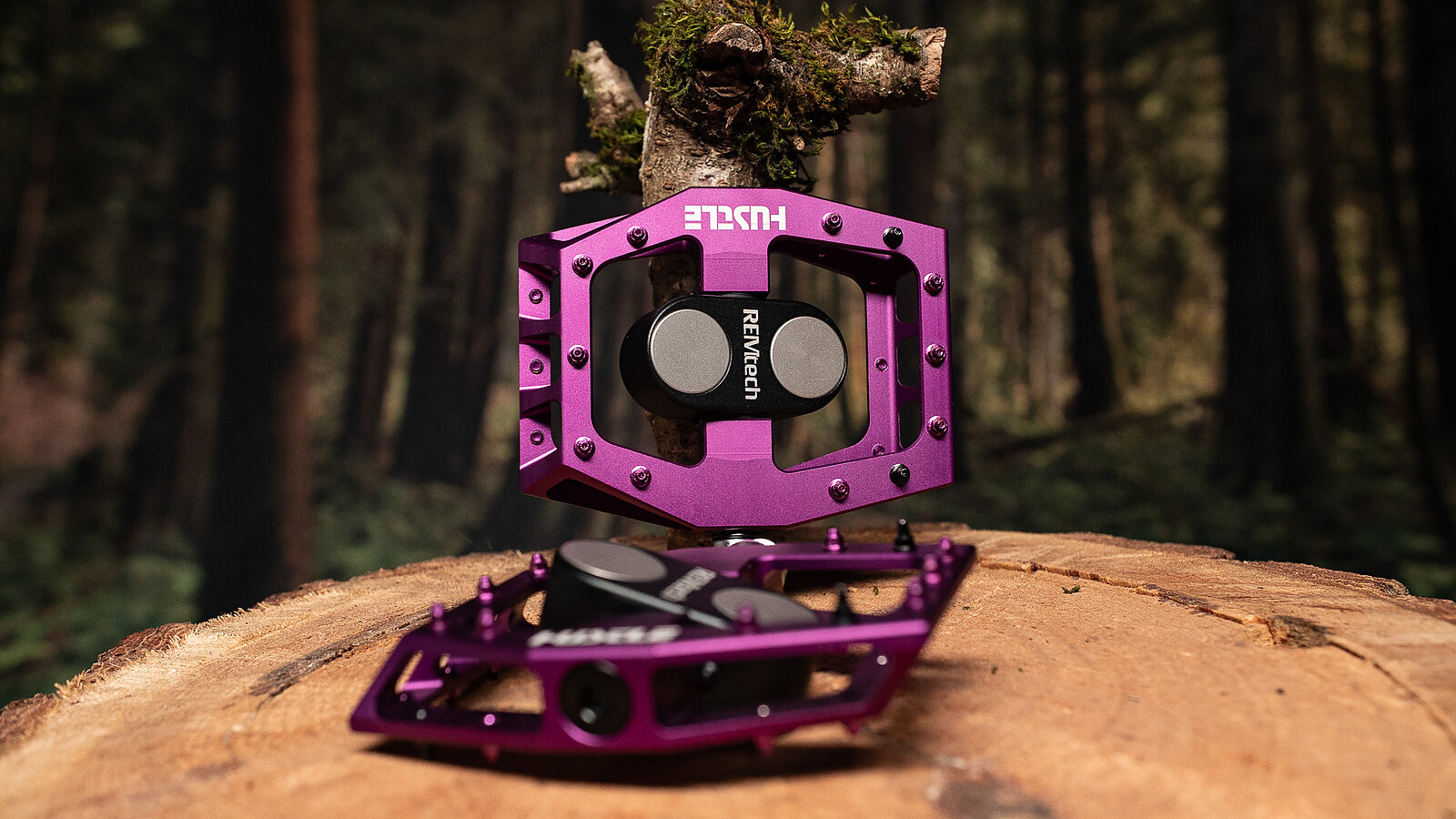
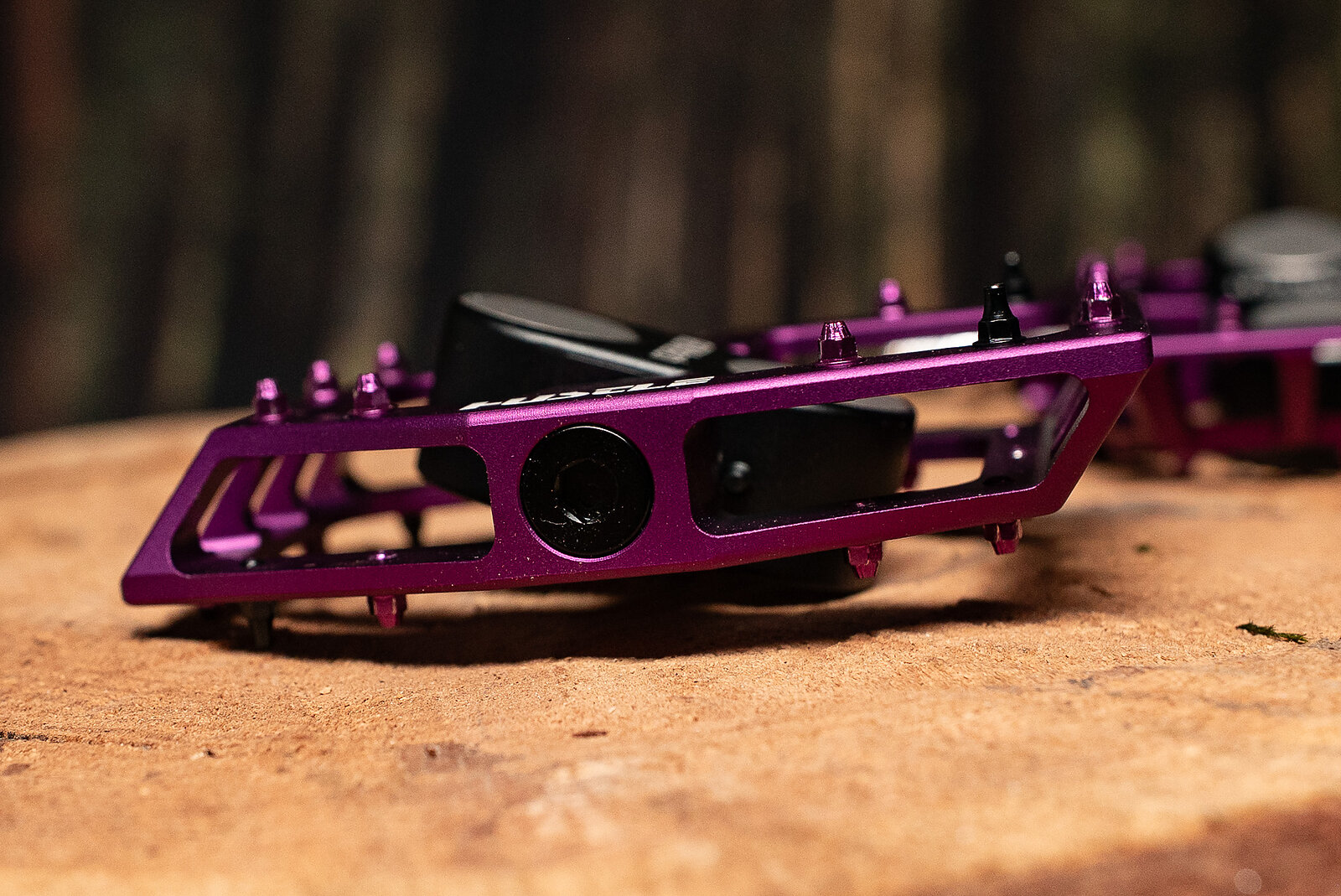
Hustle Bike Labs Avery REMtech Pedal Overview
- Magnets: 4x Neodymium N52 magnets per pedal
- 12 pins per side, swappable between 3 and 4 mm
- 19.4 mm thick
- Measured weight: 399 g (one pedal, with pins)
- MSRP: $225
Why Magnets?
While most mountain bikers are content riding either traditional clipless pedals or flat pedals, there is a sub-group that feels stuck between those two options. While I’m primarily a happy flat pedal rider who dabbles in clipless from time to time, I can empathize with folks who want a middle path. There’s a lot to be said for the downhill retention of clipless pedals. It requires less work from my leg and foot muscles to keep my feet on the pedals and I stay locked in better on fast and rough trails. The flipside, of course, is that clipping in and out can get hectic, especially if there’s any sort of exposure or, more importantly, if you’ve got bad ankle articulation.
That last point is important. There’s a baseline level of ankle flexibility required to make clipless pedals work, and although multi-release and entry cleats help, it’s still not enough for plenty of folks. That especially applies to adaptive riders and folks with lower leg amputations. If you’re riding with a prosthetic, you need good pedal retention, without the complicated entry and release procedure of clipless pedals. And, in that situation, magnetic pedals like the Avery make a whole bunch of sense.
Hustle Bike Labs Avery REMtech Setup
The challenge that every magnetic pedal I’ve seen faces is that you need to be able to easily dial in the clearance between pedal and shoe so that the magnet and plate are in contact when the pedal is loaded with weight, but don’t click out of contact every time you pull up through the stroke. Magped solves this by mounting their magnets in a floating mechanism that allows you to dial in how high they stand off of the platform. This works OK, but requires a fair bit of fiddling.
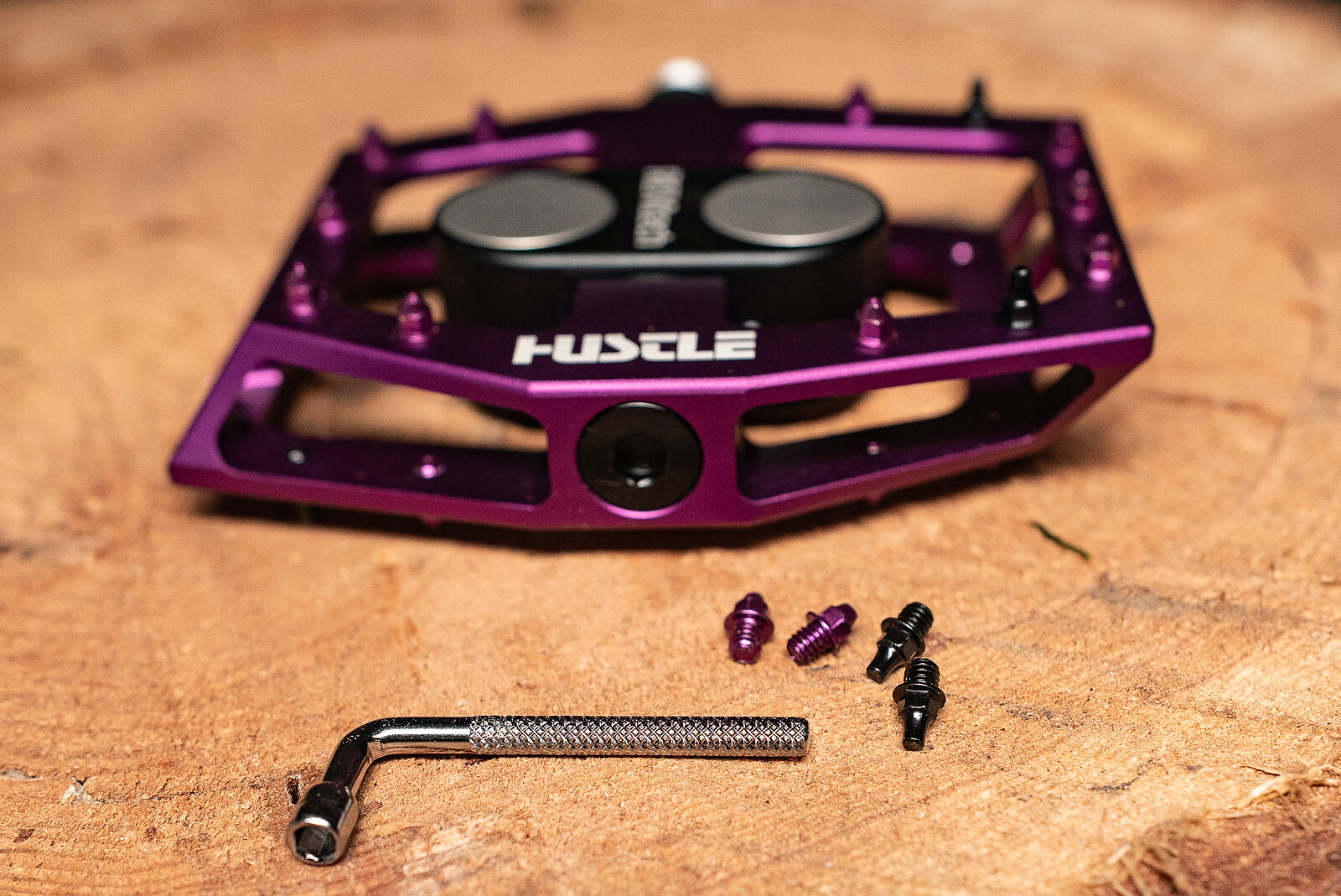
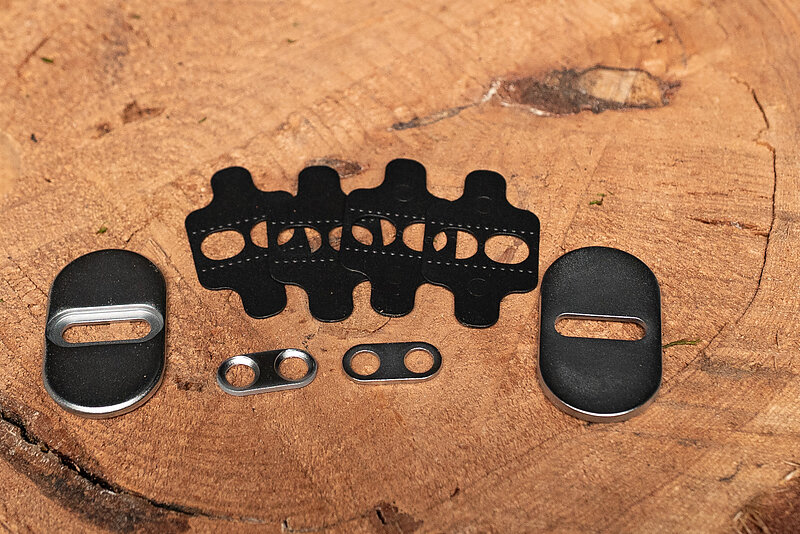
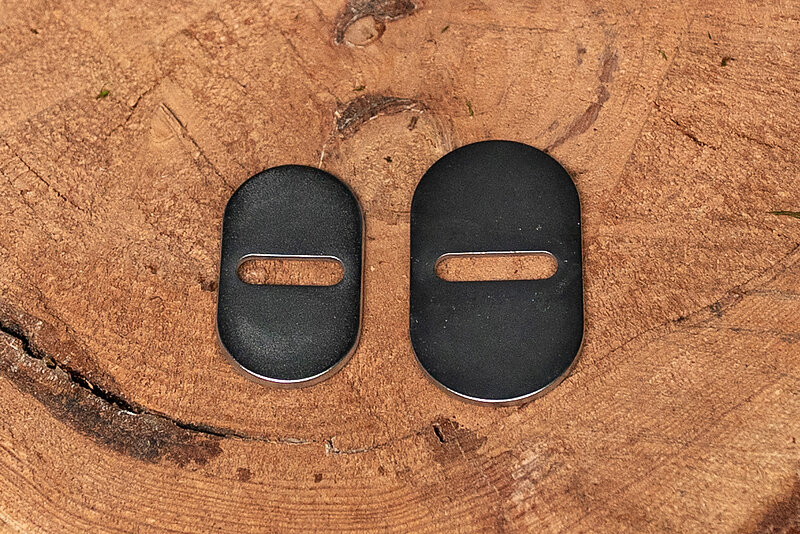
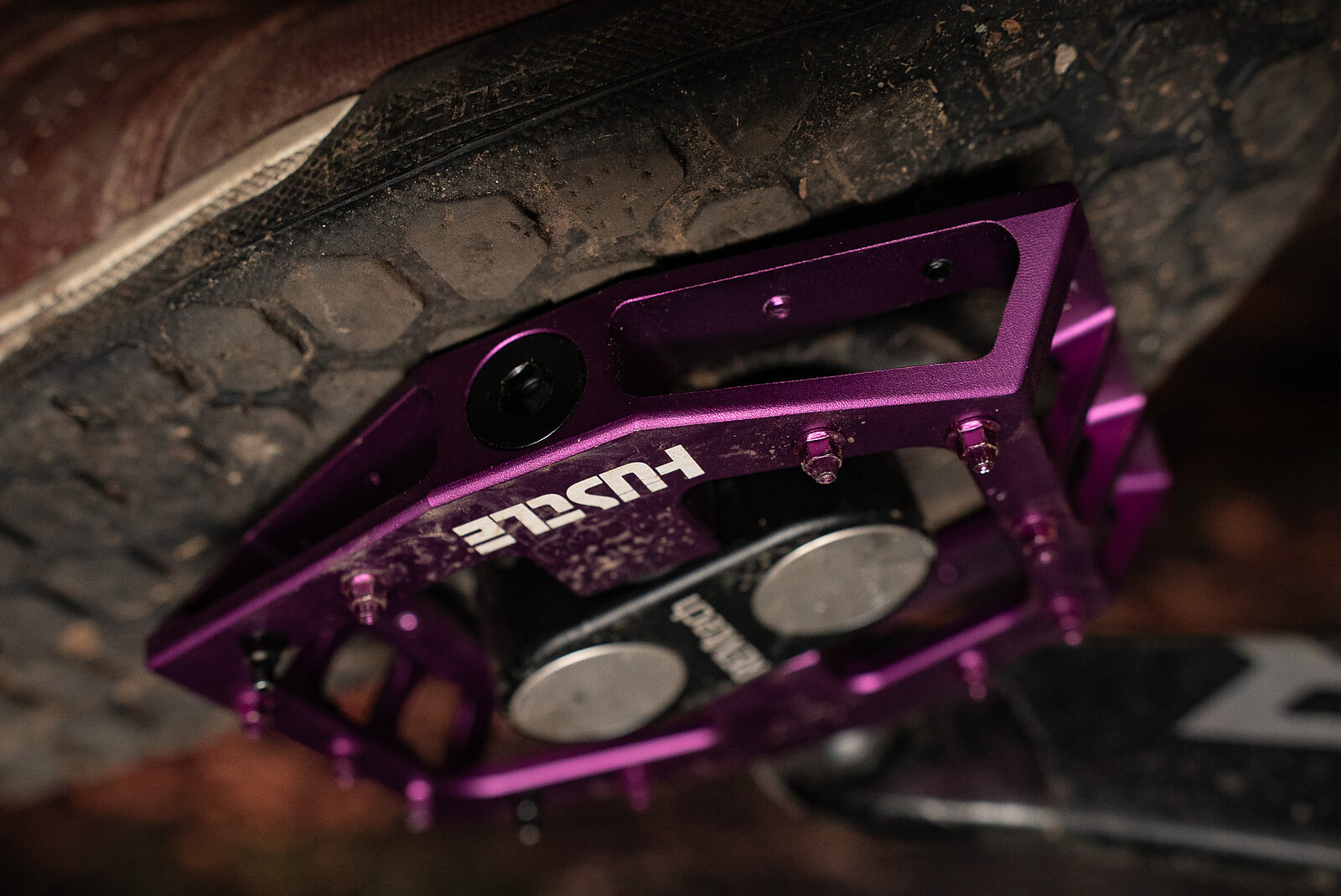
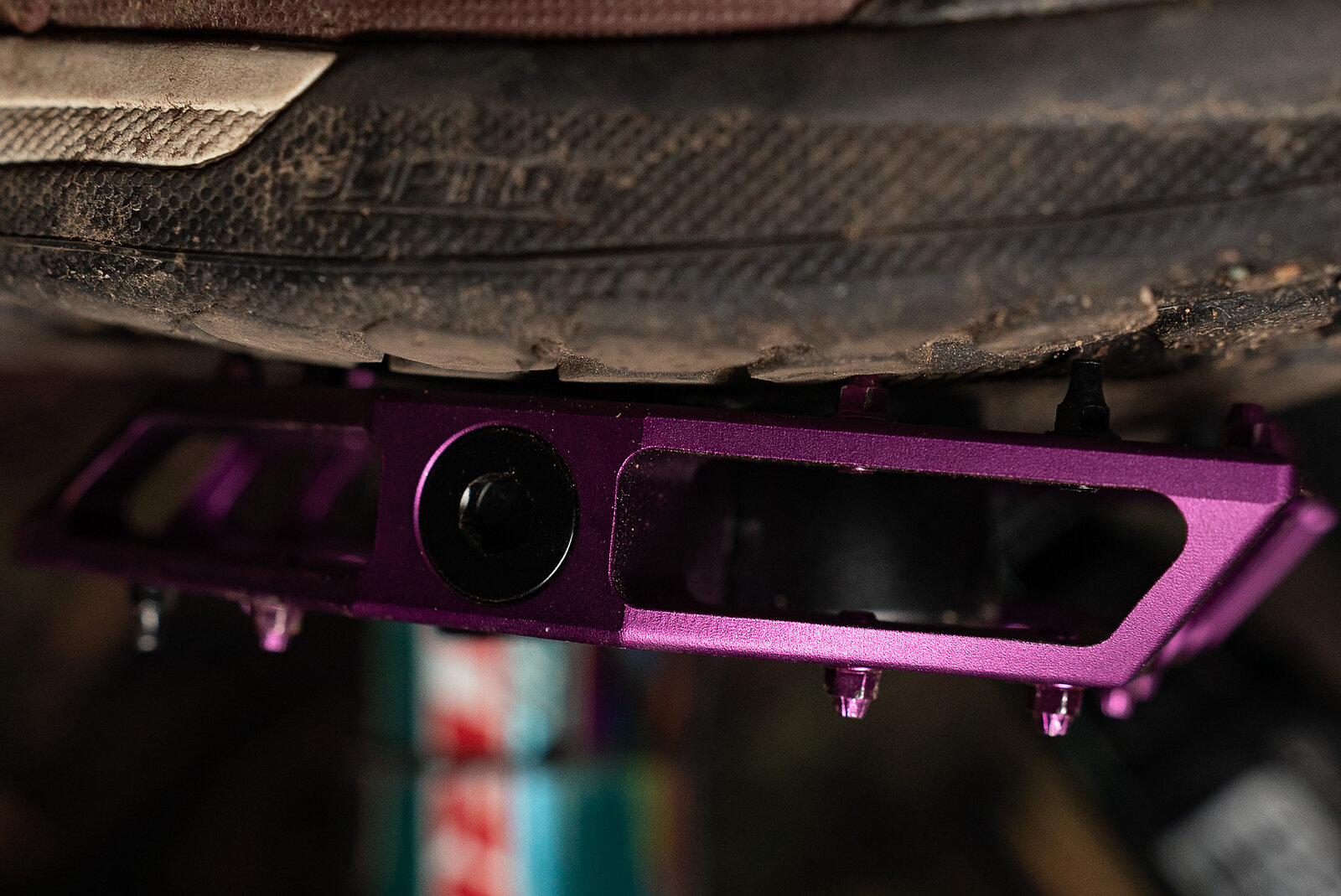
In contrast, Hustle mounts its magnets to an independent platform that rotates on the pedal spindle. That means that the magnets stay locked to the plate, even as your foot rocks back and forth. You can adjust how far out the plate protrudes from your shoe with the included shims, and Hustle makes two pin heights to further tune the engagement. Hustle also makes two plate sizes: the Regular and the Pro. The Pro nearly fills up the whole cleat cutout and gives you a bigger sweet spot to engage the magnets. I experimented with both and preferred the Pro.
It’s important to run the Avery REMtech on a flat-soled clipless shoe. I used the Specialized 2FO, which worked perfectly with no shims under the plates. Hustle actually says the 2FO isn't the ideal shoe for these pedals, because the sole is somewhat convex, so you don't get optimal shoe/pedal integration. They recommend a flatter, more neutral shoe.
It’s also very important to remember how magnets work. These pedals want to suck tools and fasteners to themselves. They also want to grab on to each other. Keep the pedals separated when you’re working on them, otherwise you might end up with a bloody hand thanks to the pedals sandwiching you aggressively between two sets of pins.
Finally, Hustle says these won’t work with e-bikes using Bosch’s Performance Line CX motor. They mess with the magnets that sense your wheel speed, and I’d be cautious about using them with any e-bike that uses a magnetic speed sensor on the chainstay.
Once you’ve got the plate height set, you can mess around with pin placements. I opted for the longer K9 pins at the corners, with aptly-named Shorties everywhere else. It’s worth noting that Hustle makes a bunch of colors of pins, so you can go wild here, but they all thread in from the top, so if you shear one all the way off, you’ll have to figure out how to extract the threads.
Hustle Bike Labs Avery REMtech Performance
Out the gate, I’d argue that the Avery REMtech performs more like a flat pedal than a clipless one. Yes, it’s pretty sweet how magnets suck your foot to the pedal as soon as you get it close and, yes, they do provide a noticeable upgrade in retention, but I found myself riding with much more of a flat pedal technique than a clipless one. By that I mean that I still relied a lot on the mechanical grip of the pins on my soles, and I appreciated how they don’t have the same free float as a clipless pedal. That might, in part, be related to my choice of shoes, although I don't think any magnet system will ever quite match the vertical grip of a traditional cleat with the release tension turned up.
Compared to a true flat pedal though, the Avery REMtech doesn’t have quite the same range of positioning available. That’s due to the size of my shoe's cleat box, not the pedal’s design. I tend to run my feet very close in to the crank arms (that’s why every review bike I ride has a shiny patch on the cranks) with the inside edge of my foot hanging over and grabbing the inside corner pins. I can’t quite do that on the REMtech, which means I have a little more of a wide, clipless stance.
You can pull up a little more on the upstroke with the REMtech than with a flat pedal, but if you pull too much, you will pop off from the magnet. Similarly, when pumping and popping the bike through rhythm sections, you’re more locked in to the pedal than with flats, but you still need good technique (dropping the heels and toes to react to terrain, pushing back or forward into the pedals to retain traction) because otherwise you’ll blow a foot off. You’ll still be rewarded for good fundamentals and punished for bad ones.
But, on the flip side, these are much easier to get into and out of than any clipless pedal I’ve used. Lift any edge of your foot off the pedal, and twist in any direction, and you’re out. It’s a tiny bit more engaged than getting off a flat pedal, but not by much.
I appreciate that ease of exit, along with the increased security in chundery sections. I found myself letting my feet and ankles relax, instead of employing all the little supporting muscles to keep them locked to the pedals like I usually would.
It is worth noting that the REMtechs are a lot heavier (almost twice as heavy) as most flat pedals. Similarly, they’re quite thick. If either of those are your primary concern, you’ll probably want to look elsewhere. But, Hustle Bike Labs does have a great selection of replacement and service parts available, so you should be able to keep them spinning smoothly for years to come.
Compared to the Magped Gravity Pedal
Both of these pedals take different routes to solving the same issue, but I think the Hustle Bike Labs Avery REMtech handles it a little more elegantly. I found that it was much easier and faster to set up the REMtech than the Magped. The Magped required quite a few driveway laps to get the magnets all lined up to the right height so they wouldn’t click on the trail, and I found myself adjusting them periodically. In contrast, the REMtech was plug-and-play, and the rocking magnet mount system has kept them quiet and engaged with my foot on every ride with no issues.
However, the Magped is a little cheaper, lighter, and thinner than the REMtech. Once the Magped is set up correctly, both pedals perform pretty similarly on the trail. It feels like both provide a similar level of magnetic retention, and are similarly easy to get into and out of. I do think the Magped provides a little more mechanical traction, its pins are taller and bit better into my shoes. That means that the Magped rides just fine with regular flat pedal shoes, whereas the REMtech feels a little more slippery.
At the end of the day, I’d probably opt for the Avery REMtech though, since it was so much easier to set up, and has stayed quiet and trouble-free on every ride. And, if you care about cool anodized colors, Hustle is the clear winner there.
For Now
Magnetic pedals still strike an uneasy balance between clipless and flat options, but the Hustle Bike Labs Avery REMtech might be the best example of the genre I’ve ridden yet. If you’re trying to find something to bridge the gap, it’s worth your attention.
Learn more: Hustle Bike Labs