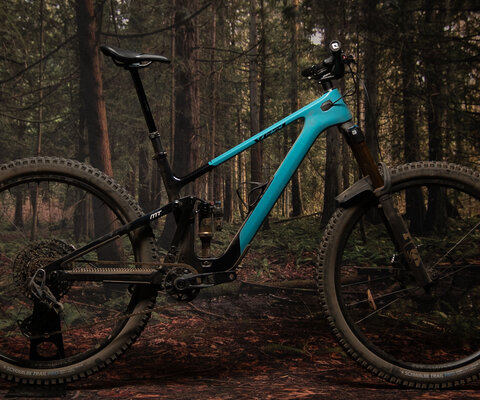
Secret Society Japanese Mountain Bike Culture Thrives Behind the Scenes
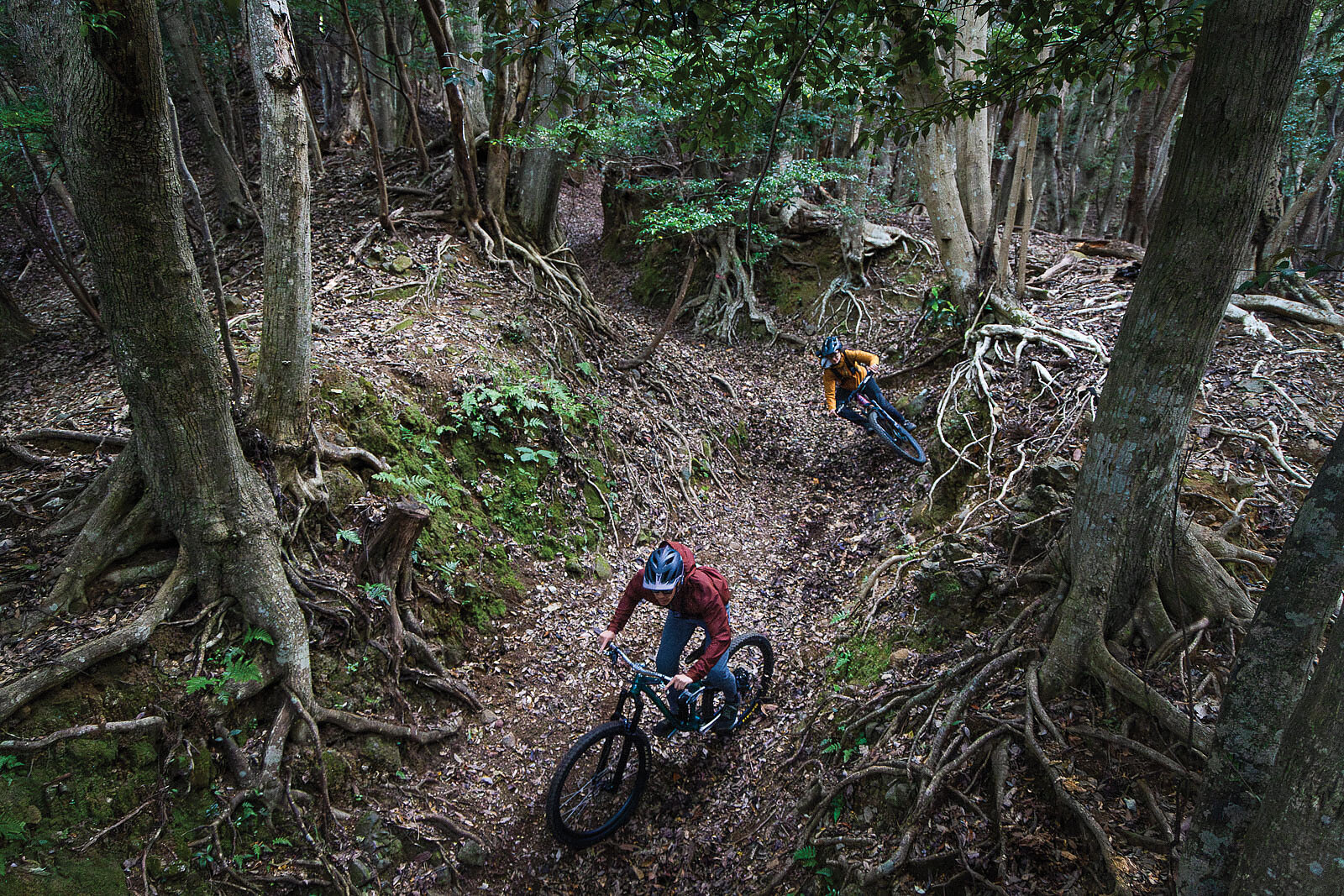
The leaves feel like Pacific Northwest powder under my tires. Soft enough to drift the back end in a playful slash, but firm enough to create traction atop the slick, clay-rich soil below.
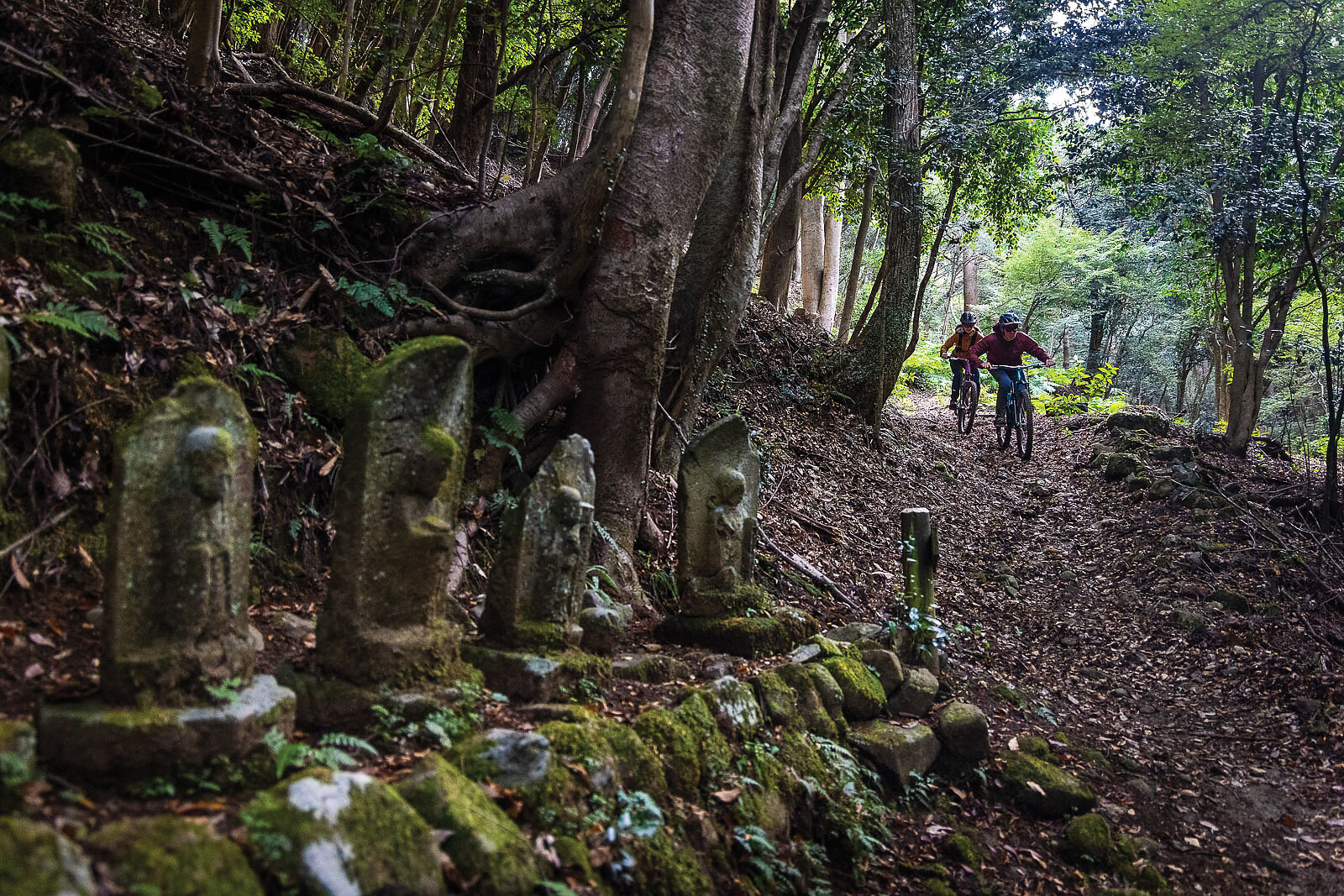
The morning sun shines brightly through the open natural hardwood forest—called Satoyama—an endemic demarcation between wilderness and human settlement. Wide tree spacing and a naturally manicured forest floor allows space for creativity and playfulness among the rolling detritus. Dropping off the ridge, the forest changes character with arrow-straight trunks of artificially planted Japanese cedar anchored in wide banks of loam so dark that it consumes any remaining light penetrating the dense canopy like a black hole.
In line with the vast majority of Japan’s non-bike park trails, this gem is not on any map, app, or website. The tightlipped riding community on Honshu—the largest of Japan’s four main islands—vets the riders they share their secrets with, and makes sure guests adhere to proper etiquette: Watch for hikers around corners, don’t skid, and leave no trace of the ride on social media.
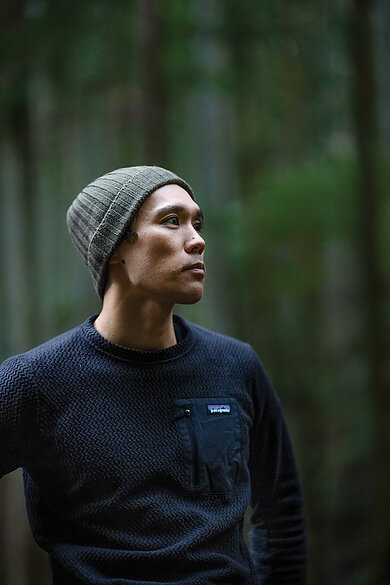
Our local host, Jinya Nishiwaki, is a surgical bike operator who honed his skills on both sides of the Pacific. Born in Tokyo, he grew up in the southwest of Saitama Prefecture, where the Kanto Plain and the Chichibu mountains intersect, providing endless outdoor opportunities. Riding bikes to friends’ houses and hitting sketchy homemade jumps kickstarted Nishiwaki’s love for bikes and, at age 12, he began racing cross-country with high school friends whose parents were into mountain biking. But it wasn’t until 2006, at age 19, when he unlocked the true possibilities of knobby tires during a trip to mountain biking’s holy trinity—Whistler, Squamish, and the North Shore—with Japanese tour operator and Chromag rider Yoshi Tsuji.
“This trip totally gave me a new perspective of what mountain biking was. I decided to move there once I graduated [university],” Nishiwaki says.
With Tsuji’s influence, Nishiwaki got in touch with Chromag about a bike, then repeatedly hounded founder Ian Ritz for a job until he joined the boutique brand as its fourth employee, assembling parts and working as a mechanic. By joining the Chromag Friday Rides and spending every waking moment riding or working with bikes, Nishiwaki’s skills flourished. Videos of his fluid and precise style in the Whistler Mountain Bike Park aboard a 26-inch hardtail with 140 millimeters of front travel, along with a fourth-place finish in the notoriously gnarly 4Queens race—when he rode most of the Garbanzo-Village DH stage with only one shoe—turned heads in Canada and Japan, resulting in international sponsorships.
After three years enjoying summers in Canada and winters in Japan, Nishiwaki felt a pull to return to Japan full-time.
“I wanted to explore my homeland in more detail,” Nishiwaki says.
By then, both his skills and equipment were light years ahead of his formative riding days and the reemergence felt like seeing old trails with new eyes. Trails originally deemed too technical now felt accessible and a world of possibilities opened up as he reconnected with his original riding crew.
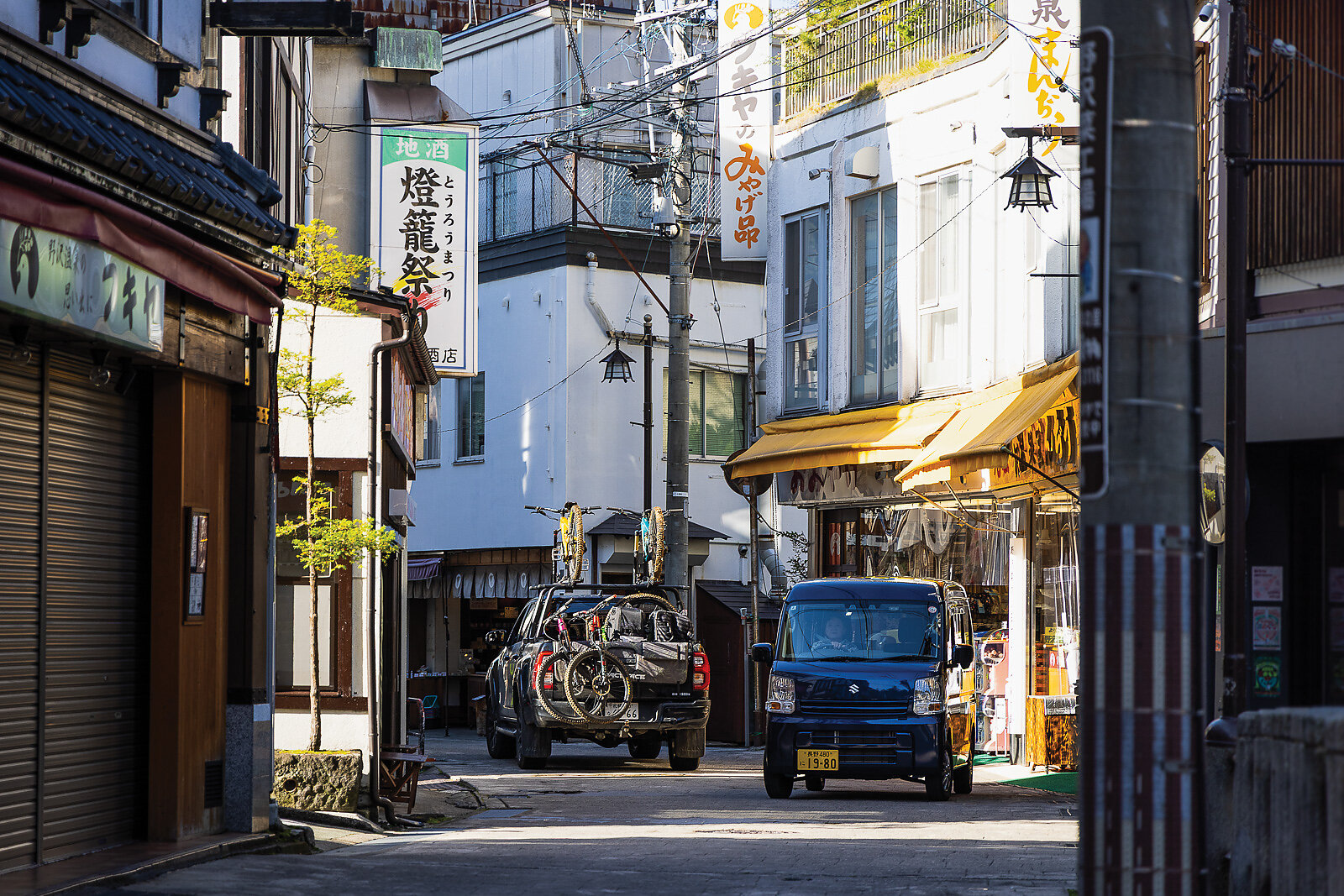
In Nishiwaki’s absence, his buddy Takeda-San had discovered new trails, but kept them secret in secular riding groups across the island. Trails are not posted to apps like Trailforks in Japan, and using Strava is taboo. The mandatory secrecy did not arise from greed but necessity.
“Locals who have rediscovered trails and brought them back to life don’t want outsiders to ride them,” Nishiwaki says. “We want to progress this sport but we also want to keep it to ourselves. It’s a little dilemma.”
This dilemma is indicative of the larger growing pains facing Japan’s mountain bike community. With its natural terrain—roughly 75 percent of Japan is mountainous, and many ranges are already carved with ancient paths—and mild coastal climate, Japan has the right ingredients to be a year-round riding paradise. But, despite the immense riding potential, it’s rare to come across designated mountain bike trails outside of lift-accessed commercial bike parks. Most riding outside of the park happens on hiking trails, which can cause conflicts between trail users. Clashes on and off the trail are both cultural and complex.
Known as a conservative and respectful society, the Japanese place a high value on societal harmony. They follow rules, respect others and believe in the greater good over individual gratification. If the general populace believes that mountain bikes damage trails, are threatening to hikers, and don’t align with environmental codes of conduct, the likelihood is that most riders will not rebel but rather conform to these societal conceptions, regardless of whether they are based in fact or opinion. It’s a far cry from North American culture; imagine where mountain biking would be now if this was the stance taken on Vancouver’s North Shore throughout the 1980s and ‘90s.
This is why new trail discoveries are generally closely guarded and only revealed to trusted friends. Although most hikers don’t seem to mind sharing trails with mountain bikes, the riding style is nevertheless influenced.
“Since we’re not really allowed to do maintenance on any trails, we want to ride in a nice way and preserve the trail,” Nishiwaki says.
This reticence pushes the sport underground and out of sight of younger kids who are key to taking up the cause of advocacy, progression, and keeping the sport alive.
“It’s hard to get into these sports because we don’t really share any info about mountain biking,” Nishiwaki says.
The evidence speaks for itself: At 39, Nishiwaki is the youngest in his riding group apart from the 10-year-old kids of his riding buddies.
He estimates there are anywhere from 5,000 to 10,000 riders on Honshu, which carves a modest representation of 0.0001 percent of the island’s 104 million residents, while hiking numbers come in between 8 and 10 million participants. To call the sport niche is a wild understatement. Access is a large part of why it hasn’t proliferated.
“Most of the lands are private property and sometimes there are dozens of landowners within a few hundred meters of a trail,” Nishiwaki says. “Getting permission from each one of them [to build or maintain trails] is virtually impossible.”
Public lands in Japan are highly regulated and generally earmarked for timber production and conservation as opposed to recreation. A frustrated Nishiwaki recalls an instance when he wanted to fix a drainage issue on his local trails with a water bar. He went to the city to get permission but they turned him down, saying that the trail itself acts as a water bar, preventing water and debris from flowing into the private property near the trail. The attitude of prioritizing private land use over access to recreational opportunities is pervasive throughout the country, but is generally not opposed.
“We care so much about other people in Japan that we don’t go out and [build rogue trails],” says Nishiwaki.
Not to mention the steep penalties for disobedience, which can soar up to 1 million JPY ($6,400) and include jail time and orders to restore the area back to its original state.
The foundations of a more mountain bike-centric future are now budding despite being hindered by antiquated, conservative mindsets at the governmental level. Immense passion on the ground could provide the framework for safety, sustainability, as well as bring future economic advantages, which is desperately needed. A huge portion of the population in Japan used to make their living from the mountains’ natural bounty, but with the adoption of modern fuels and a mass exodus toward urbanization, many rural Japanese communities face a slow demise and, with it, a loss of history, culture, and tradition. Mountain biking offers the potential to change that.
Revitalizing forgotten trails along with modern new builds can provide avenues for community and forest regeneration and opportunities to experience the mountains in a different way for a new generation. It’s a movement that could not only benefit the sport and those who love it, but potentially save, and surely enhance, these small mountain communities, enabling the preservation and propagation for traditions old and emerging to flourish—if local governments are open to progress.
In some areas of Japan, that progress is coming quicker than in others. Nishiwaki and I head due south of Mount Fuji, where the Izu Peninsula juts tranquilly into the northern waters of the Philippine Sea to a revitalization of trails in progress. The larger cities of Izu and Ito slip slowly into the rearview mirror as the relaxed pace of rural Japan comes into view in the form of sheer nearshore islands mounded with tropical vegetation cleaved from the sea cliffs that fortify the winding coastal road. Above, steep green ridges dive from the summits of Mount Amagi into the sea where the hills reverberate with a storied history of ancient trails beneath its thick canopy.
We’re here to ride the forgotten trails of Nishi-Izu Road with Junichiro Matsumoto, the founder of Yamabushi Trail Tours (riding with a guide is required to access the trails). Dating from the Heian period (794 -1185 AD), this anachronistic network of roads and paths were used to connect villages and temples, with arteries snaking high up the narrow ridges into the Satoyama for charcoal collection to fuel the houses and kitchens of Izu, as well as Edo (modern-day Tokyo). Over centuries, charcoal production in Japan evolved into a highly specialized craft. The traditional method involves slow-burning hardwoods like Ubame Oak, Tsukaboki (Japanese Hornbeam), and Buna (Japanese Beech) rendered with flame in a low-oxygen kiln high in the hills, creating a product that is almost pure carbon. These processes result in different types of charcoal, each with unique properties for specialized dishes like Kushiyaki (skewered grilled foods), large open grills for Robatayaki, or Izu’s specialty: bonito flakes known as Izu-bushi.
For much of Japan’s history, charcoal was the main source for heating and cooking and represented a thriving industry nationwide until World War II, when the adoption of petroleum-based fuels, natural gas, and widespread electricity usurped traditional methods for animating households and transportation. The industry rapidly fell away along with the rural population, tradition, and a legacy of responsible forest management. The Satoyama quietly reclaimed the historic mountain roads and foot paths until they were virtually lost from memory.
When Matsumoto heard from a village elder that there were 1,200-year-old mountain roads buried in the hills, he knew he had to search for them. A Yokohama native, Matsumoto embodies the essence of exploration. A lifelong traveler whose hitch-hiking trips around Japan during his youth led to sojourns through Asia, the Middle East, and South America by motorcycle and on foot, Matsumoto discovered a deep passion for the intersection of history, culture, and adventure that ancient trails weave together while hiking in the Himalaya, Karakoram, and South America. When he learned that there were trails in his backyard that were much older than those of the Inca, finding them turned into an obsession. He hunted down a map from the Meiji period (1868 -1912) and got to work uncovering the paths. A key feature of the trails quickly became apparent.
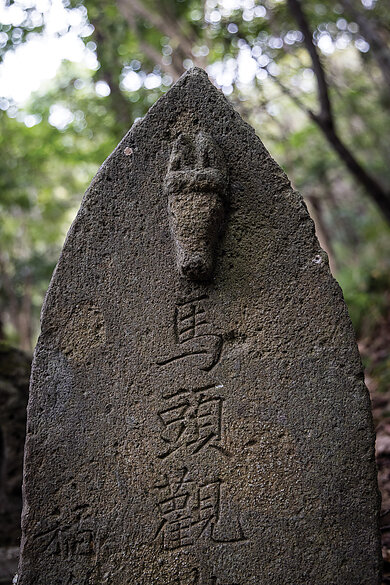
“At first, I started maintenance work alone, lugging a hoe and chainsaw, but as I cleared away fallen leaves, earth, and trees, I found a number of horse-headed Kannon and stone monuments,” Matsumoto says.
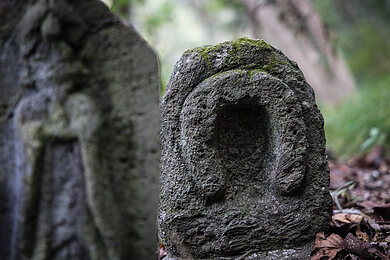
Kannon are memorial headstones, in this case for horses. Horse-drawn sleds were used to transport charcoal off the mountain and a number of Kannon were endowed with a handprint to represent the bond between horse and human. Hundreds of years of gradual erosion from the sleds created winding halfpipe features that Matsumoto realized would be perfect for mountain biking.
In 2012, Matsumoto learned forestry practices and began the complex work of obtaining permissions to uncover and transform the trails.
“I attended council meetings in over 20 different villages and negotiated patiently,” Matsumoto says. “These are traditional, closed rural communities, but surprisingly, many of the elders supported the idea of a young guy in his 20s trying to create a new form of tourism. Their endorsement was the key.”
Since then, he has unearthed seven paths totaling 40 kilometers and created Yamabushi Trail Tours, a private guiding operation on the exclusive trail network. Although one of Matsumoto’s goals was to create a nexus of legal mountain bike trails for everyone to ride, the landscape is more nuanced when opening trails to the public.
“If we were to open [the trails] to the general public, we would lose control over illegal riding, accidents, and friction with the local community,” Matsumoto says. “By keeping it strictly guided-only, we can ensure safety, maintain trail quality, and most importantly, keep our promise to the villagers that we will manage the mountains responsibly.”
Our ride begins from a centuries-old Hozo-in Buddhist temple carved from the forest. Stone Jizo statues covered in moss and creeping vines line the sandō (or path) leading to the modest temple shaded by towering Japanese Cedar. The primordial atmosphere sets the tone for the ride as we drop into a technical descent strewn with mossy rocks and roots. We pass decrepit charcoal kilns and weather-worn Kannon depicting indecipherable characters, religious icons, and tributes to ordinary workmen.
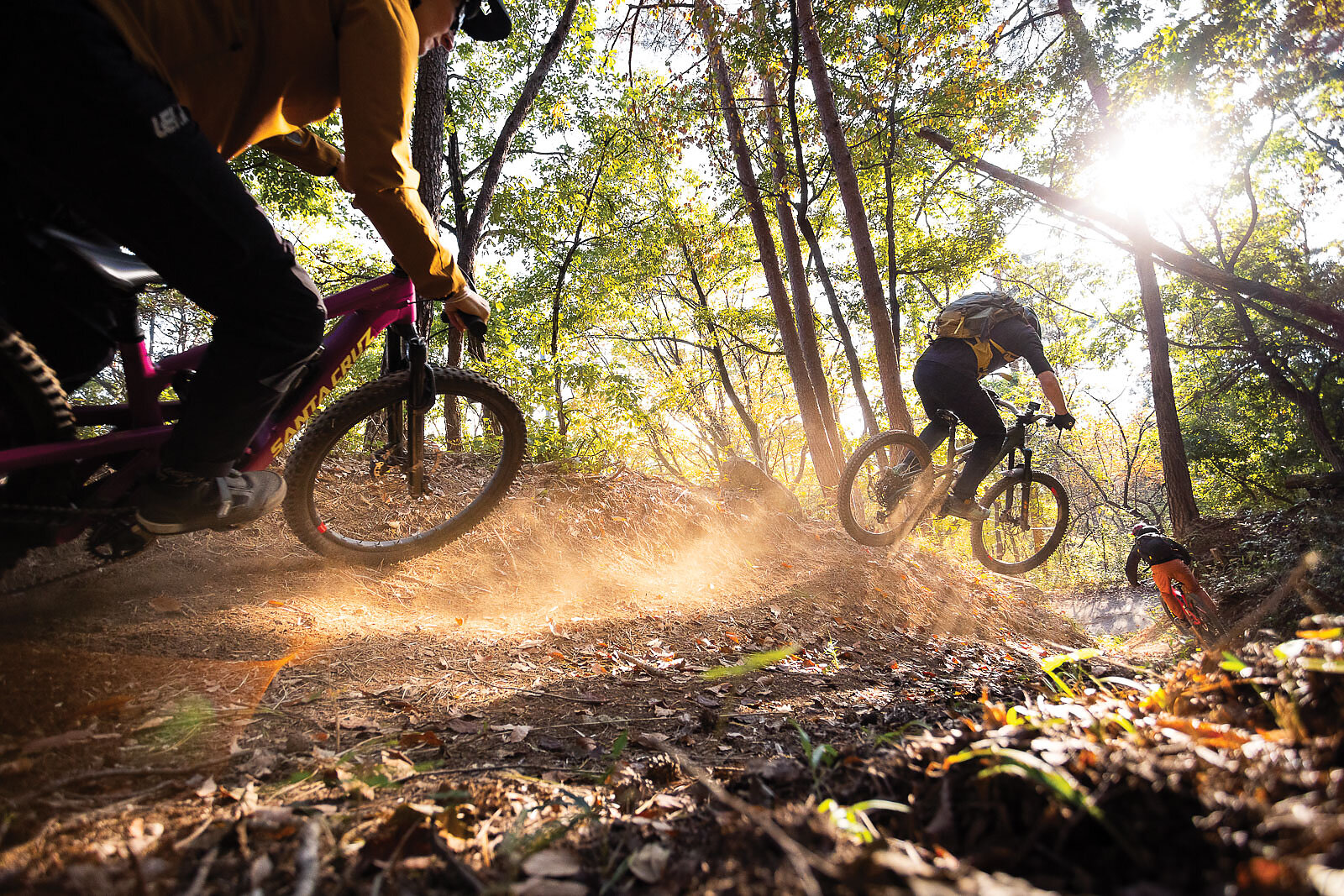
As Matsumoto envisioned, these ancient trails, beaten into submission through a millennium of compaction, are perfect in their original form, requiring little maintenance apart from drainage and removing deadfall. The sled-hewn lines feel natural within the terrain and have a vibe more akin to freeriding than trail riding. The wide trail bed with steeply banked, twisting walls allow for endless creativity in line choice while the leaf litter is the summer incarnation of “Japow,” a term popularized by Japan’s plentiful powdery snowfall in the winter. It’s a unique sense of freedom not typically found on purpose-built singletrack. Each lap is a new opportunity to refine line choice, personal expression, and discover previously unseen features.
Matsumoto’s commitment to the local community and the environment is earnest. Aging forestry workers could not properly manage the Satoyama, which creates biodiversity and safeguards against landslides to protect the marine ecosystem; Matsumoto’s maintenance efforts address this. The trails he works on provide tsunami evacuation routes and allow local hunters and villagers growing shiitake mushrooms new access to the forest. The wood cut from trail during maintenance is sold to local restaurants and fuels Matsumoto’s own restaurant, Quebico, which operates entirely free of fossil fuels, powered instead by the harvested wood. He gives ash from the stoves to farmers for fertilizer and uses their vegetables in his restaurant.
“By revitalizing ancient trails and properly thinning the trees, we have created a system where recreational use equals conservation,” Matsumoto says.
A different method is being tested on Japan’s second-largest island, Hokkaido, which lies just north of Honshu across the Tsugaru Strait. The small town of Niseko (population 5,100) is one of Japan’s rare rural communities that is experiencing population growth. Consistently epic winters have pinned Niseko as a bucket-list destination for snow sports lovers and the community is looking to harness that energy for year-round recreation.
There, the Niseko Area Mountain Bike Association (NAMBA), which started in 2021, is taking a more North American approach by using a not-for-profit volunteer trail organization as its framework. NAMBA founding member Andy Meadows says the goal is “to grow and unify the Niseko area mountain bike community toward the common goals of creating, enhancing, maintaining, and protecting great places to ride in Niseko and the surrounding area.”
Although informal ideas of a trail network had been floated since 2013, the group officially mobilized after Grand Hirafu Resort announced that it would not reopen its lift-access bike park post-Covid closures. With concerns of losing access to mountain biking, organization founders Meadows, Ross Carty, and Shunichi Kimura who didn’t want their riding opportunities controlled by private entities, set in motion plans for what is now the Twin Peaks Bike Park, a public network consisting of 23 trails and 20 kilometers—Japan’s largest free trail center. This is a monumental feat in just four years considering the pervasive and thick Japanese red tape.
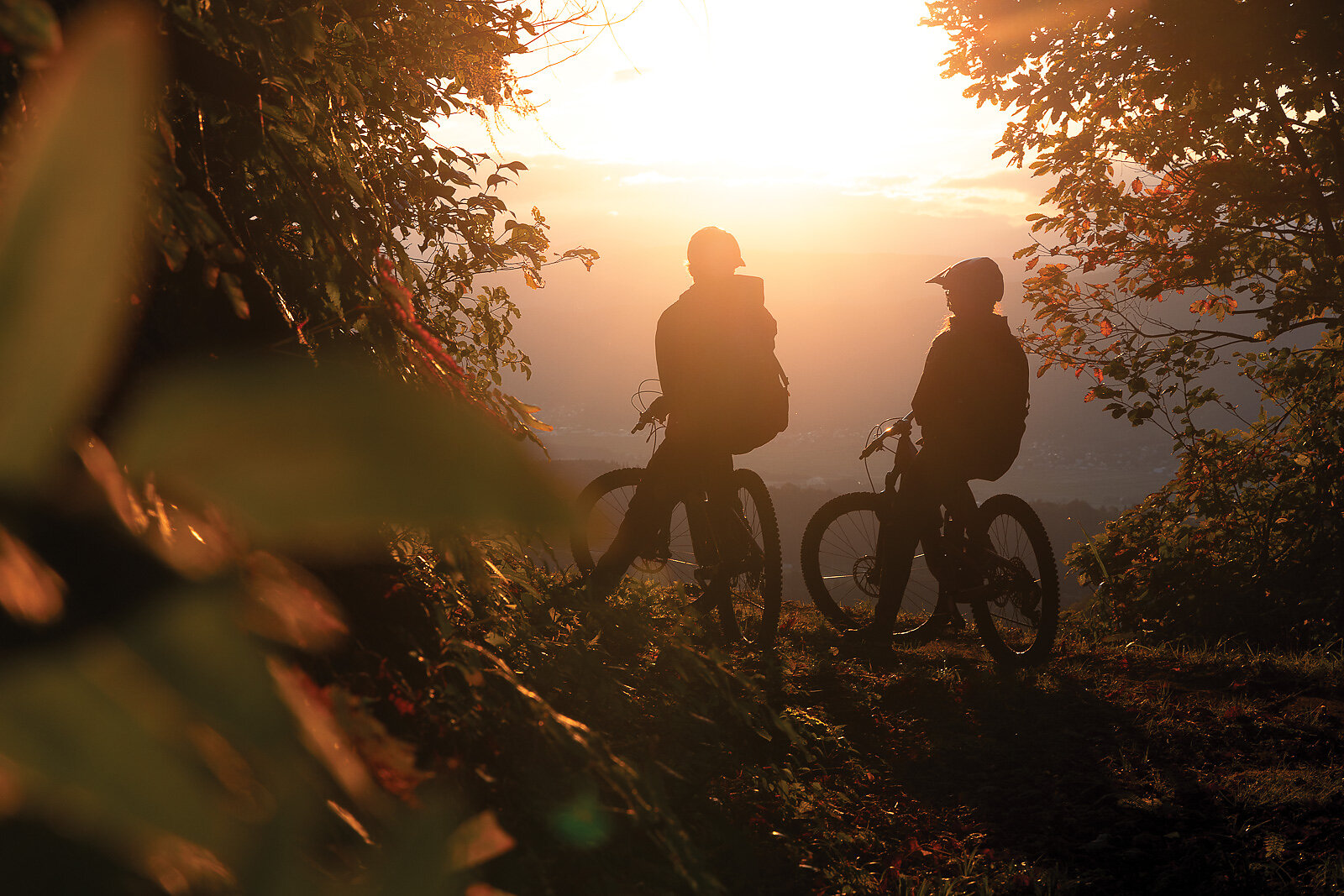
One reason for the organization’s success is its 24 volunteer board members, which consist of local politicians, resort heads, business people, and outdoor enthusiasts. The winter tourism boom has also fueled a progressive public and private funding model that allowed the organization to hire Swiss bike park specialists Allegra. The duo created a multi-phased master plan that spans the town’s five resorts, stretching to the flanks of Mount Yotei, the stratovolcano that dominates the view from Twin Peaks Bike Park. The master plan and proof of concept has created real buy-in from the municipality all the way up to the prefecture level with the goal of becoming Asia’s premier mountain bike destination.
Similar organizations have also sprouted throughout the country. The Kita Alps Bike Association and the Minami Alps Mountain Bike Club advocate for trail networks in Honshu’s Northern and Southern Alps respectively. Both organizations have had success lobbying their local governments for land access to provide free, bike-specific trail infrastructure, whether that be revitalizing old routes or breaking new ground. The overarching vision is making riding accessible for those new to the sport, while building an army of advocates to progress mountain biking from its underground roots into a nationally recognized sport.
It’s a promising start, but there is still a long way to go. Whether it’s volunteer-led trail organizations, which hold the key to changing the antiquated ideals of local and national governments through economic viability, passionate individuals unearthing ancient trails from a forgotten era, or secret trail societies proliferating through the exploration of esoteric lines down the mountain, the path forward remains unclear.
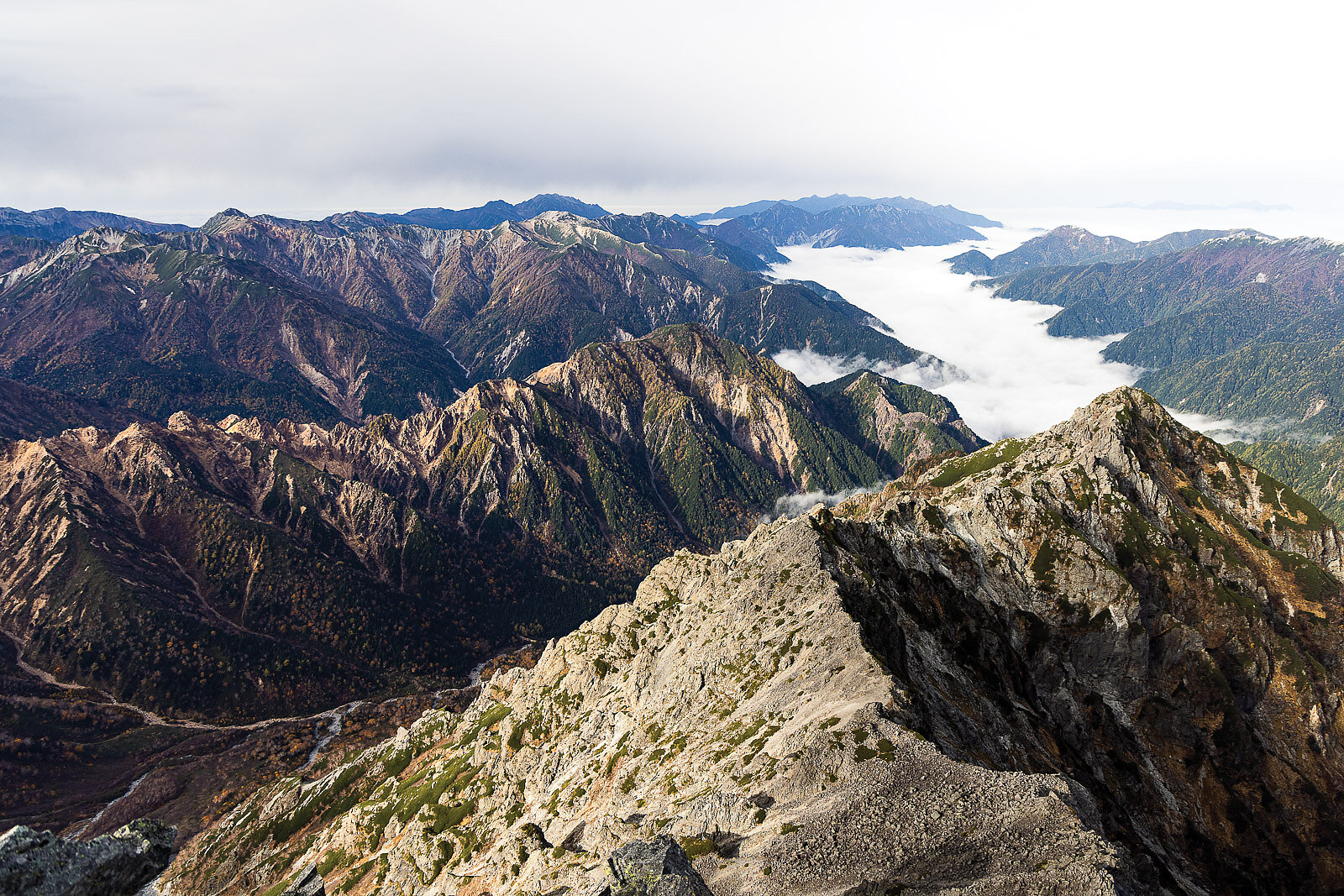
Nishiwaki and I discuss the individual merits of each approach as we push our bikes up another beautiful line of singletrack, but find no magic bullet. At the top, ridgelines cloaked in Satoyama blanket the horizon in every direction and we wonder how many trails, obscured with leaf litter, are waiting patiently for awakening.