Learning on the Fly Keeping the Spirit of Enduro Alive at Trans Madeira
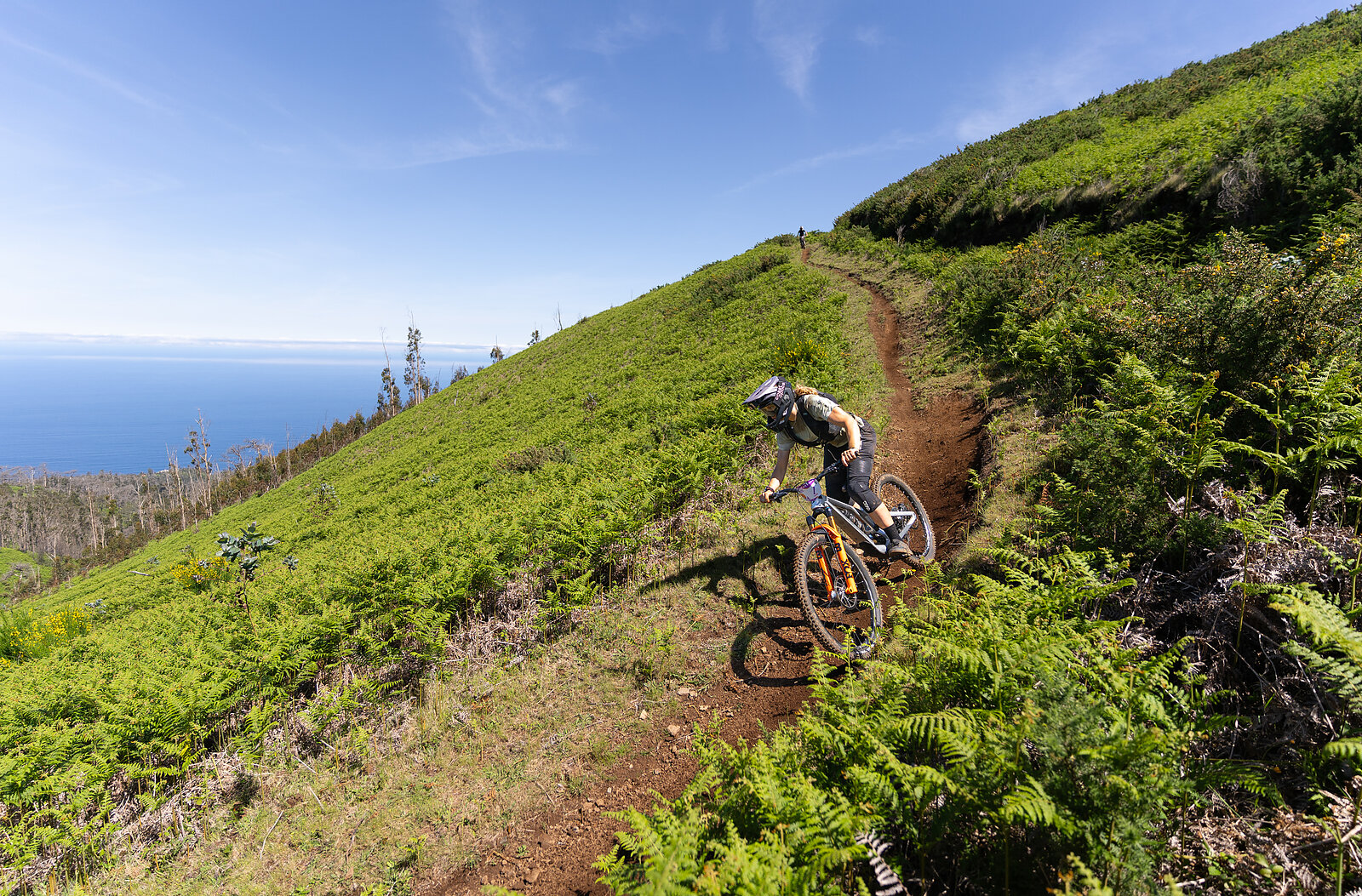
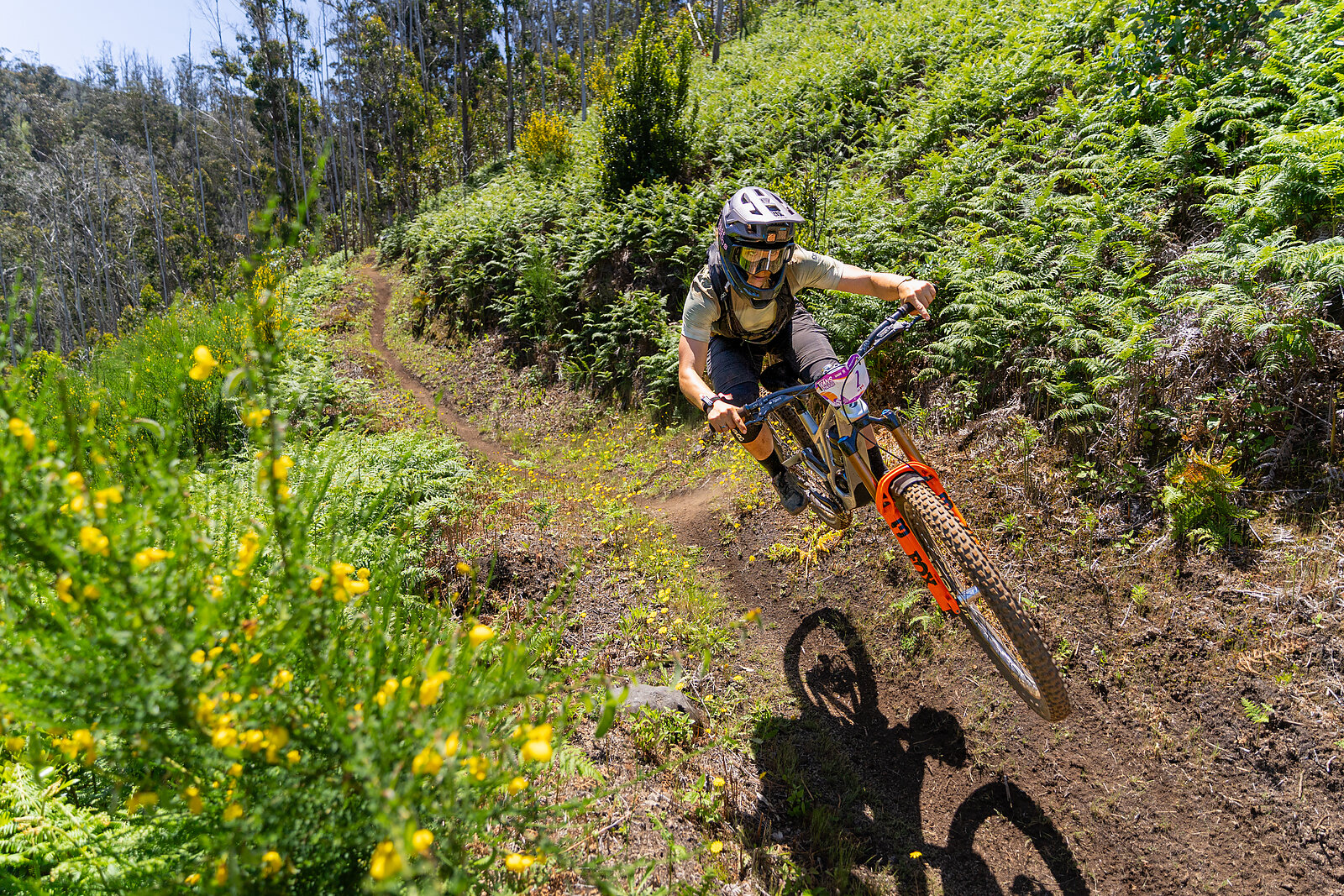
After six days of blind racing, only a handful of minutes separated ABUS teammates Kirsten Van Horne and Georgia Astle at this year’s Trans Madeira. While both were taking on this multi-day event for the first time, Georgia was channeling a decade's worth of professional racing experience, while Kirsten was taking on her first-ever enduro.
Few riders would elect for a six-day, 30+ stage, 155+ mile blind race as their entry into enduro. Still, as Georgia would point out, Kirsten is a “go big or go home” type of rider and possesses a unique skill set capable of both securing the best trick award at Red Bull Rampage and ascending 10,000 meters (32,808 ft) in a single ride. Backed by the knowledge of her experienced teammate, the two ABUS riders blindly charged Madeira’s trails, rode in party trains with friends, and left with more than a few stories of caution for "Madeira ice.” We recently caught up with these two women to hear about their experiences and how they approached this event.
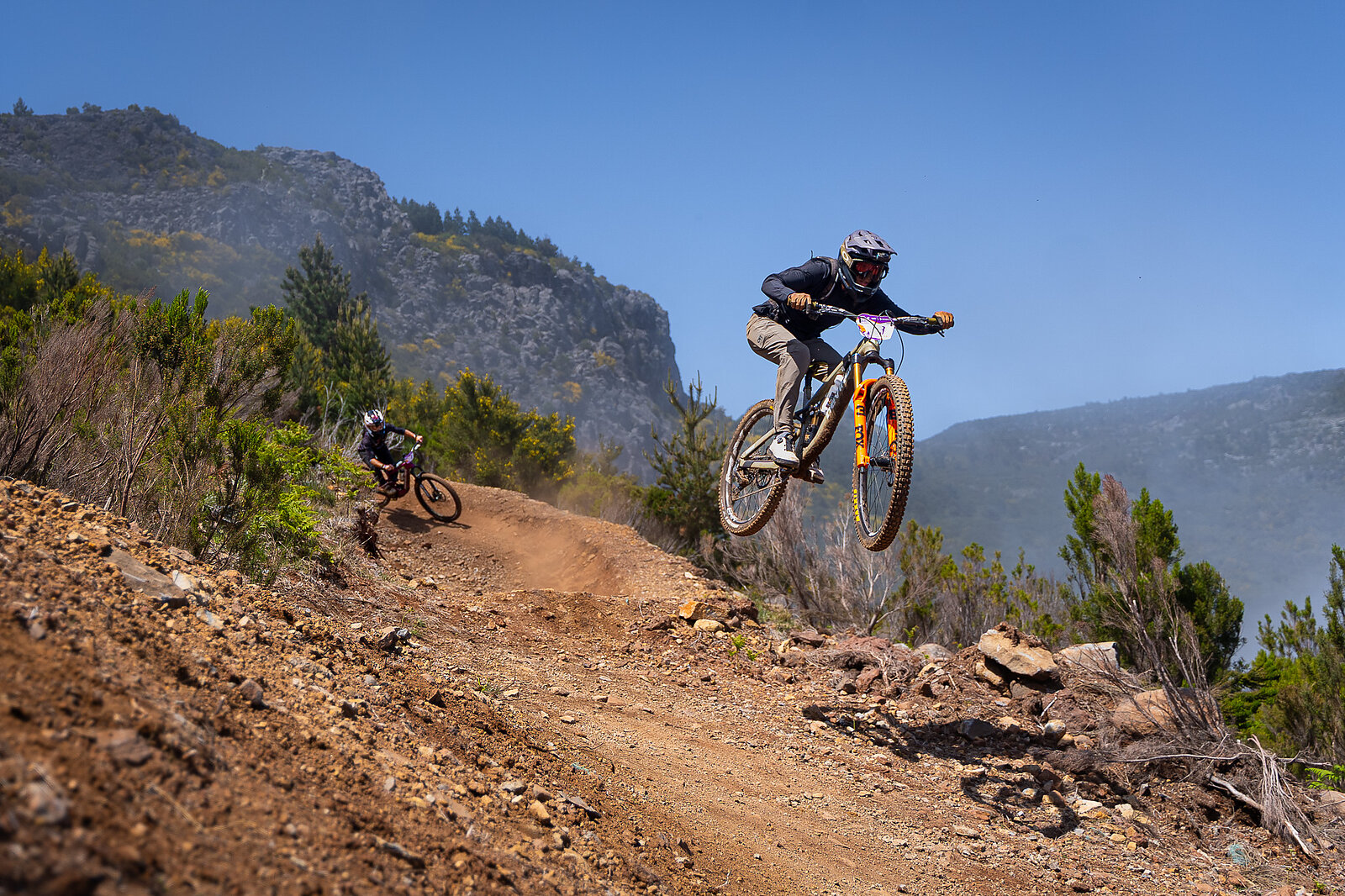
Kirsten, this was your first enduro race, whereas Georgia has over a decade of racing experience; what made Trans Madeira stand out for each of you?
Kirsten: I had seen a few people go to Trans Madeira previously, and it just always looked amazing. I was mostly going for the scenery, not going to lie. Then also to enjoy the adventure of just trying something new, because that really appeals to me. When I heard that Emmy (Lan) and Georgia (Astle) were going too, I was like, "Yeah, this is going to be so sick. I've got great people to learn from."
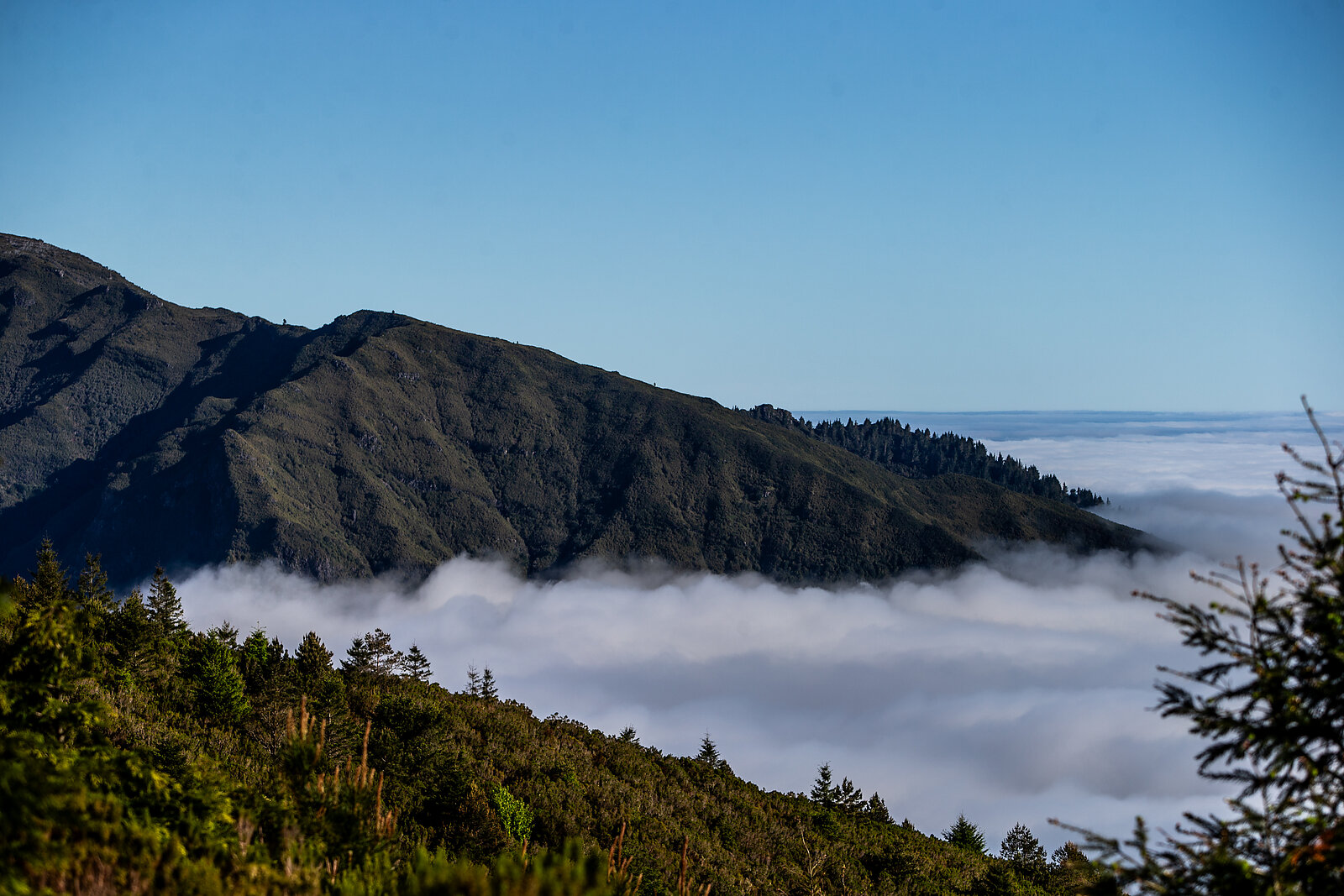
Georgia: This was my first time in Madeira. I didn't race the years they had the EWS there, and I didn't know what to expect. But I'm always amazed and impressed with the infrastructure of Europe compared to North America. It was ridiculous. Bridges and tunnels everywhere, and then once you actually get into the mountains, you're like, “Wow, I can't believe there's all of this nature mixed with this infrastructure." Madeira didn't disappoint.
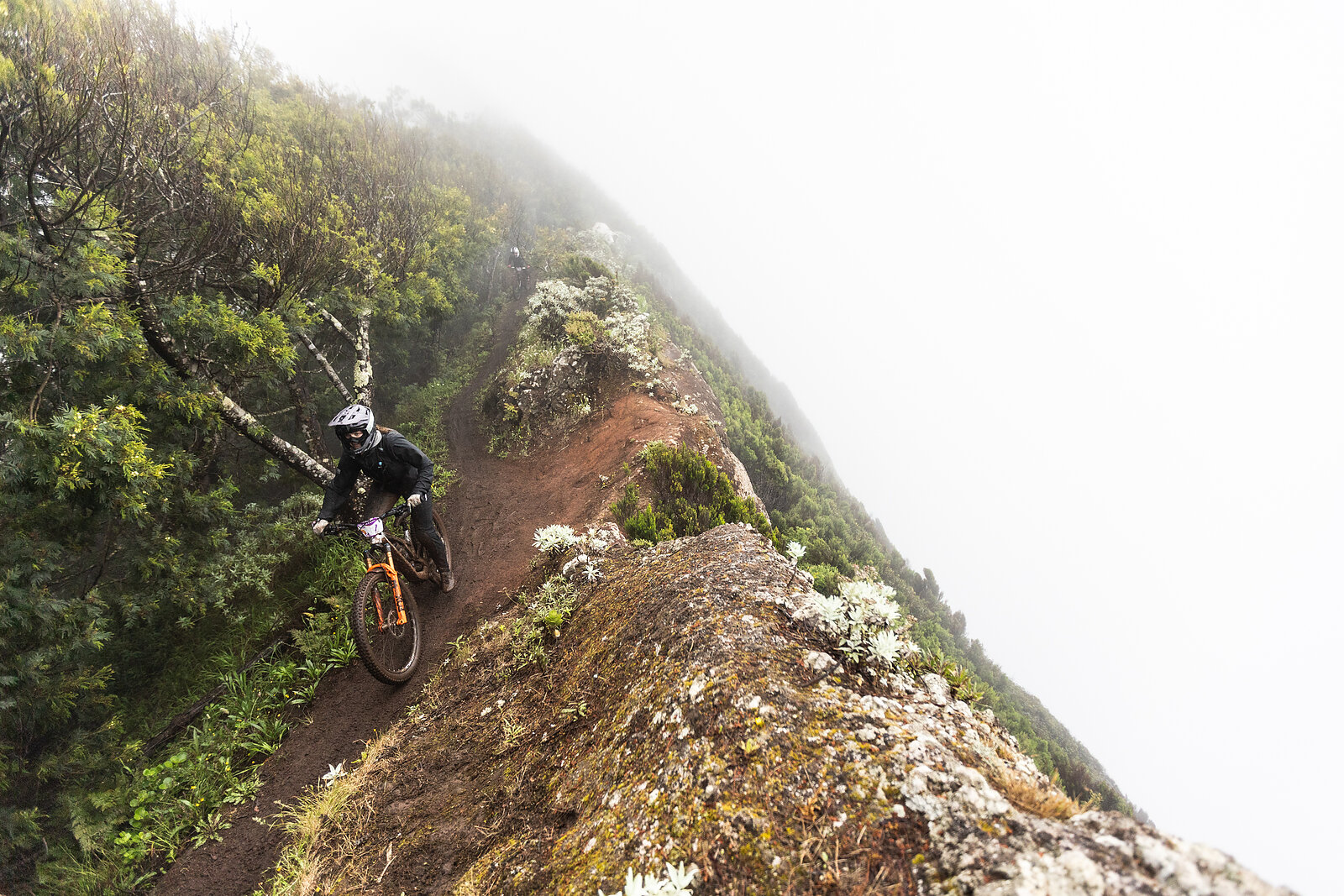
It rained pretty heavily leading into the first day; what was it like managing changing conditions and a new setting all at once?
Kirsten: We had a “fun” start because our bikes didn't show up on time. So the night before, we were building them, and we missed the practice rides. But we heard all the stories of the people who did practice, and they're like, "Oh my god, it was a slip and slide." So, we definitely got a good idea of the conditions. The first day was hectic, but super fun, and was a good bonding experience for everyone.
Georgia: I had already been warned by Anita and Carol Gehrig prior to the race. They said, "Trans Madeira is the best week of your life, but if it's wet, you're never going to be able to dry anything out.” The weather looked pretty good leading up to the race, but we’d heard rumors about the “wet side of the island," and it's true. There’s one side of the island where the start of some trails that I think are just always “Madeira ice.” It's just clay, roots, and puddles, and you're driving up the mountain so high that it's always in fog. So they started us off by breaking our morale down a little bit. So I think they know the order, and they start you off with the wet side of the island.
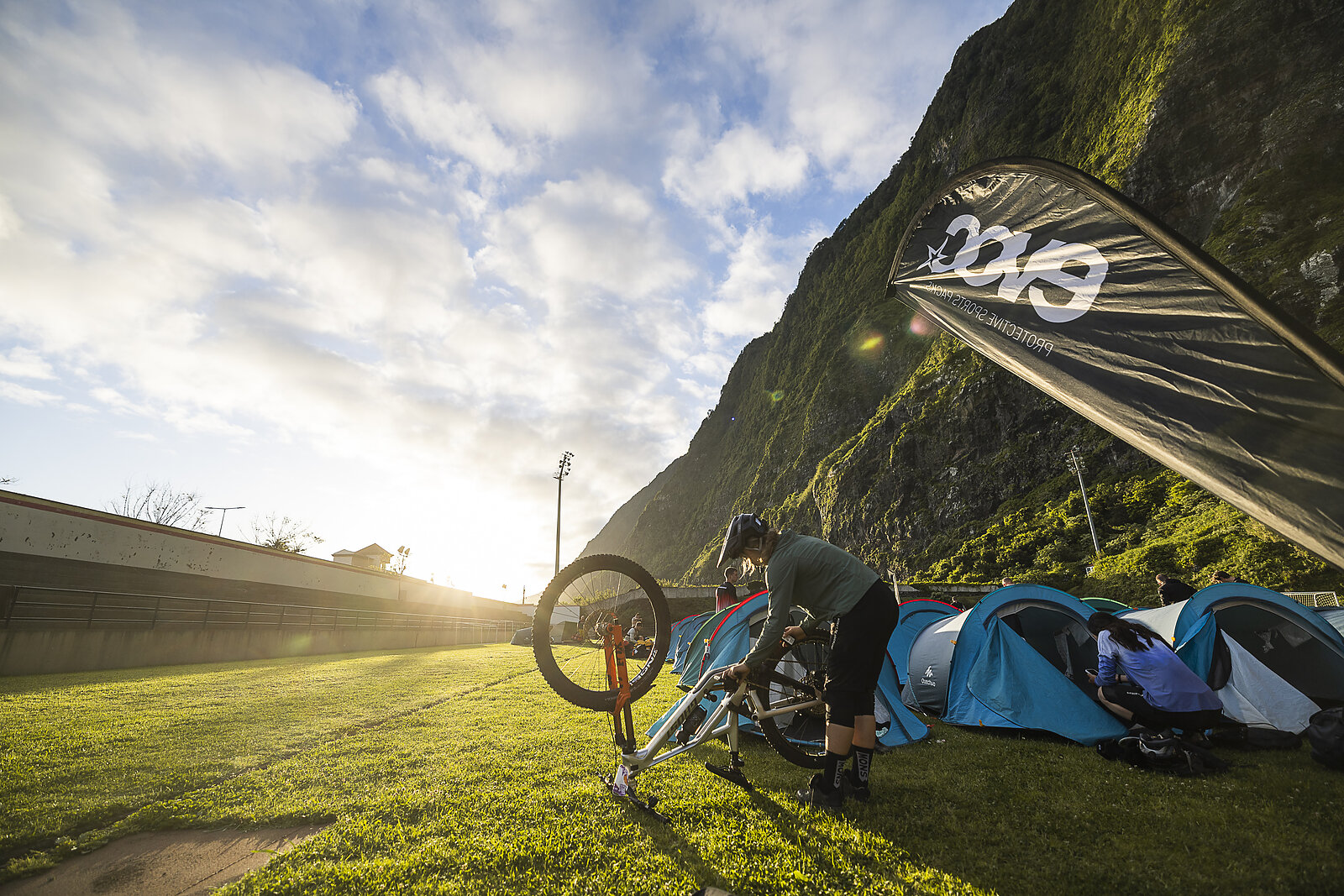
The terrain in Madeira looks like that type of clay-based dirt that gets slimy in the wet. How did it ride?
Georgia: Yeah, they call it “Madeira ice,” and it's so true because in pretty much every zone around the island, you're guaranteed to have one corner with some slime on it, and you're coming in blind. Obviously, you don't actually know how it rides, but you can just assume it's going to be slippery.
Kirsten: There was a good example that was when we did the first proper girls train, and I was following Georgia, and I saw her kind of slide, and then she caught it, and so I was like, "OK, sweet. I'm ready for it." And then before I know it, I'm facing back up the hill. I've done like a full 180. I'm looking back at our friend Shelly (Flood), who's behind me. And she's in the bushes now, too. The GoPro from that was just so funny because we were just going along a straight stretch with a slight off-camber. It's just ruthless.
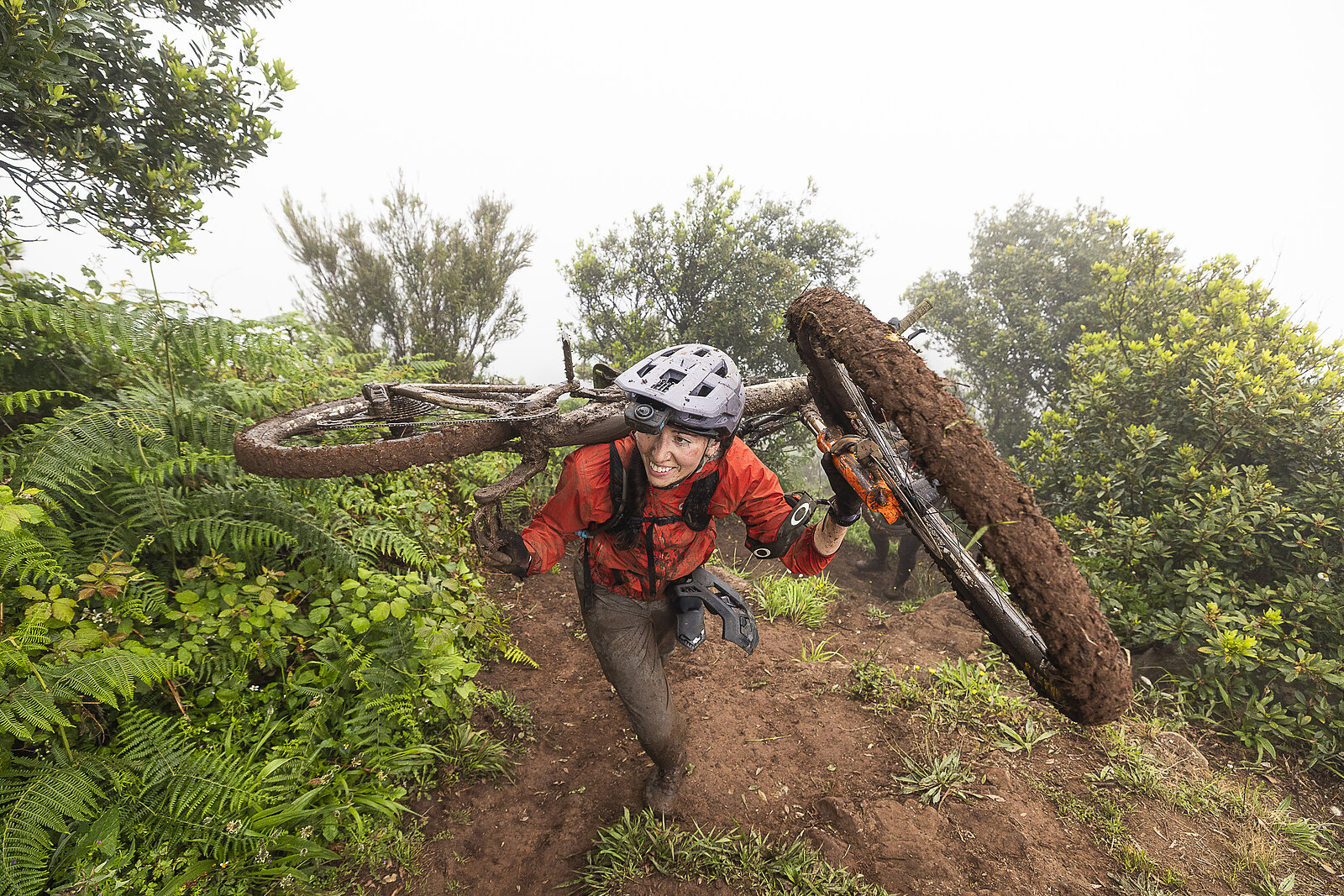
What was the approach for this event? Were you trying to take more of a racing mentality or just have fun?
Georgia: I’d say a balance of both, maybe more so on the “having fun” side. Helen (Weber), who beat us, was way ahead of the field the whole time, but between the rest, there were four of us who were kind of piggybacking and like leapfrogging in stage results. I found it amazing that after that much racing, we had really tight times. It made it so you did want to try hard because you actually want to see how we're going to do against each other.
Kirsten: Leading up to it, I was just coming from New Zealand, so I was just recovering from jet lag and just more so focusing on freeride and doing a bit of pedaling because I didn't know what I was in for. But yeah, it made me quite keen to do more and actually work on a few things to make them a bit smoother.
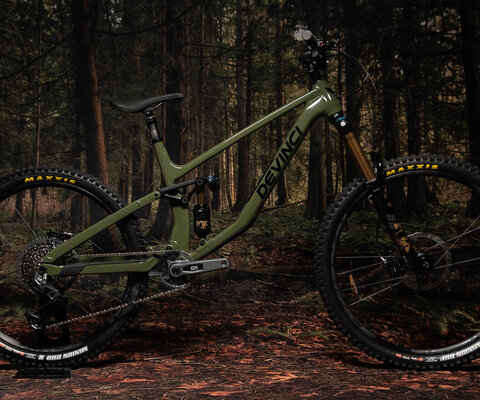
Georgia: Kirsten is like, “Go big or go home.” Like her pedal recently, she did a 10,000 meter ascent on the same 180mm travel bike she did Trans Madeira on. So it was her first enduro race, but the girl is fit, and the girl has mental fortitude. So it was really fun, getting to share that experience with a person whose “fitness side” is no worry for her. But she had questions like, “What do I do out of the start gate? What gear should I be in? When you're doing a blind race, do you go 90%, or do you go 70% effort?” All those things you actually need to learn when you race. If you're fit, it only gets you so far. There are all these little things that actually are the parts that really help you in events like Trans Madeira.
Kirsten: Yeah, I had a million questions for Geo. So, she was like my mentor. It was like, "What's this? What's that?” It worked well for me.
Kirsten, you've attributed those massive pedals to the mindset of wanting to mix it up and just become more well-rounded as a rider. Was Trans Madeira another way to get out of your comfort zone?
Kirsten: Yeah, for sure. I think the first part of my year has been pretty well-rounded. I did a 10,000 meter ride this year because I wanted to improve on the Everest challenge that I did a few years ago. Those challenges, as much as they rely on physical strength, for me, it's more so the mental strength that I haven't been great with in the past. And so, working on that and then every time I get in like a start gate, whether it's at Crankworx, Natural Selection, or Rampage, I get nervous. So I think Trans Madeira was a really fun challenge to keep pushing my mental strength with. It's a fun race, but you can take it seriously. Trans Madeira was definitely good practice for so many mental aspects.
Looking at the results, you got faster as the days went on. Finishing sixth on the first day, then fifth, then fourth. Were you getting more comfortable with being between the tape?
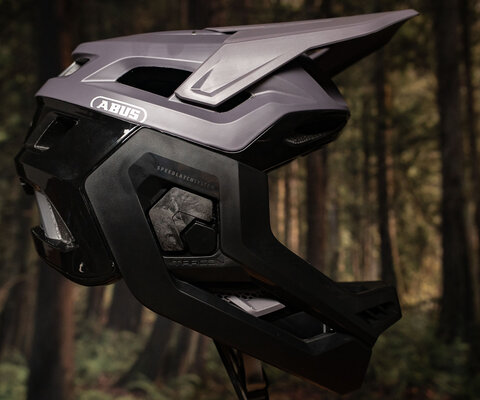
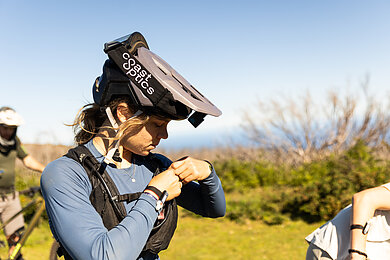
Kirsten: Yeah, I think so. Usually, when I ride my trail bike, I'm like a grandma; I typically just go for the adventure. So just changing my mindset to, “No, this is a bike I actually can push myself on,” whereas on my downhill bike, I'm always pushing myself when I'm riding. I think it was also different because having the Targon helmet on, I'm so used to riding with it as a half lid, but then as soon as I put the full face part of it on, I was like, "Ok, I can switch into this and push it mentally a bit more."
Georgia, how do you balance racing and freeride at this point in your career?
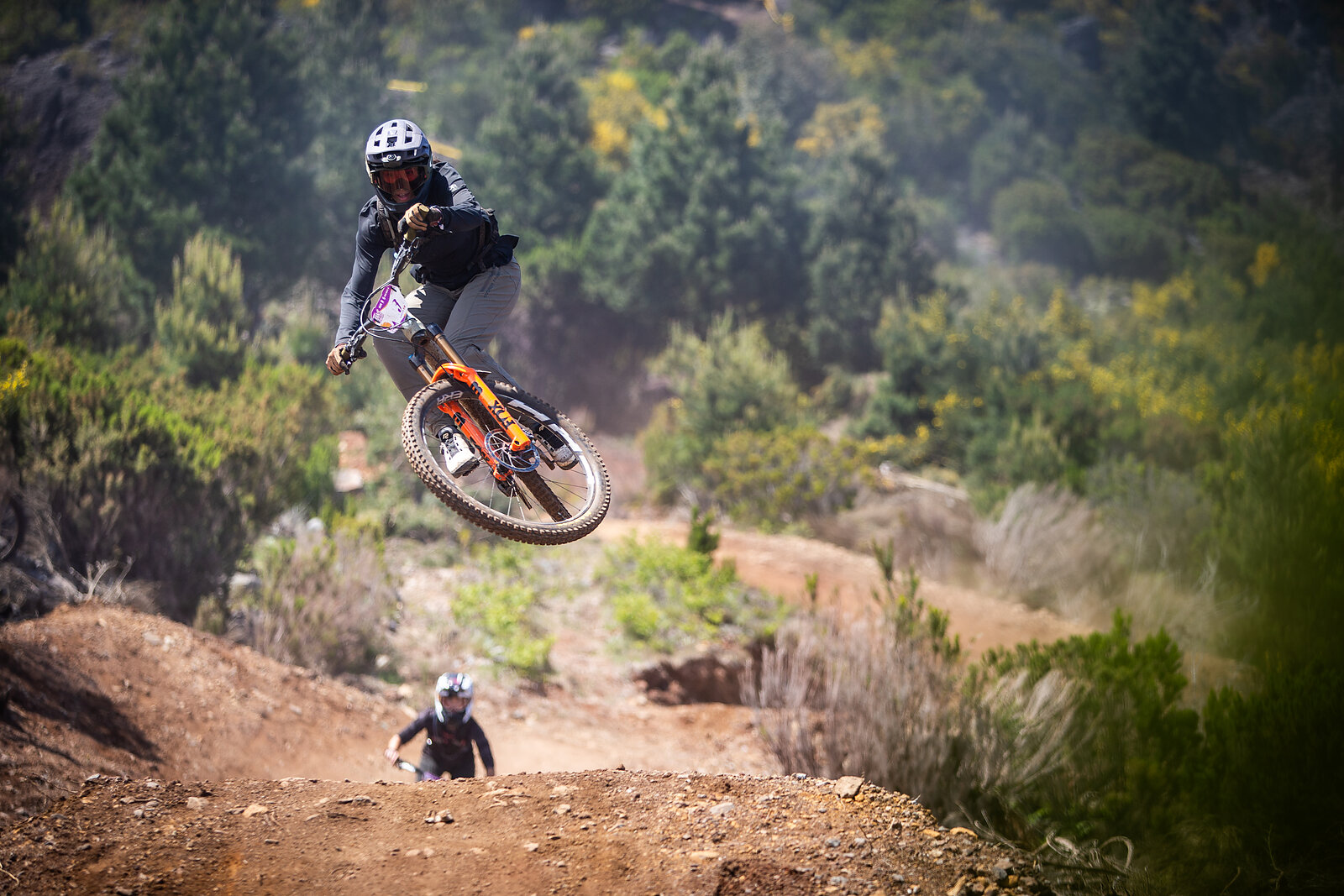
Georgia: 2022 Whistler Crankworx was my last enduro, so I had a decent-sized break, having gone full out on just freeride recently. Mostly the same as Kirsten, my trail bike was my soul bike, and then my downhill bike was like getting scared and pushing myself. But I love my trail bike so much, and I think it was important for me to still feel connected to that side of riding, the adventure, the endurance. Putting the two together, it didn't feel like a race, and it didn't feel like I was pushing my body so hard, but it was just the perfect balance of getting to race, getting to explore a new place with friends. That was kind of exactly what I think I needed to start off my season.
Later this season, I'm helping coach Casey Brown’s event, Dark Horse Academy. So last year was the first year there was an academy side, and it was really fun because the group of girls who showed up to Casey's event weren't necessarily die-hard racers; they were just dipping their toes into what the freeride scene looks like. It was really fun to have these girls at a very impressionable phase, where you could be like, "You can do anything you want with cycling." It's inspiring for me to pass that knowledge along. At the end of that week, some of them, all of a sudden, are like, "I know how to write a resume now, I want to get sponsored," and a year later, some of them are.
What was the standout moment or stage in the race?
Kirsten: Personally, I loved the first train we did on day two. I was following Geo, and it was the last stage of the day, a 10-minute stage or something like that. I hadn't followed her yet, and we were just flying, trying to keep up, and there were so many corners, and so it was super playful but also just absolutely tapped. Then the bushes were overhanging, so the scenery was so pretty, I was just giggling the whole way. Then the Madeira ice caught Geo on this one corner, and I came around the corner, and we had a bit of a t-bone moment, but then I got back up on the bike, and the rest of the trail was just following as she's like flicking down the trail. It was super playful, and yeah, I just giggled so much.
Georgia: Yeah, I feel like my favorite moments are definitely the trains. Emmy and I held off on doing trains together because our times were so tight, but when I got to do trains with Shelly and Kirsten, we were just laughing the whole way down. Some of the crashes you could hear behind or in front of you are definitely the moments I think are so unique. You hear about that when people do the Trophy of Nations, but it's pretty unique to get to do trains with your friends racing down a mountain blind.
Kirsten: I think the overall highlight is that after 35 stages, you get to have those conversations every time at the bottom of the run. That connection and just that thrill, whether you've had a good run or a bad run, is so special. You don't get that all the time, especially the privilege of riding that many trails blind; it just really elevates the whole feeling of community when you get to the bottom and get to exchange stories.
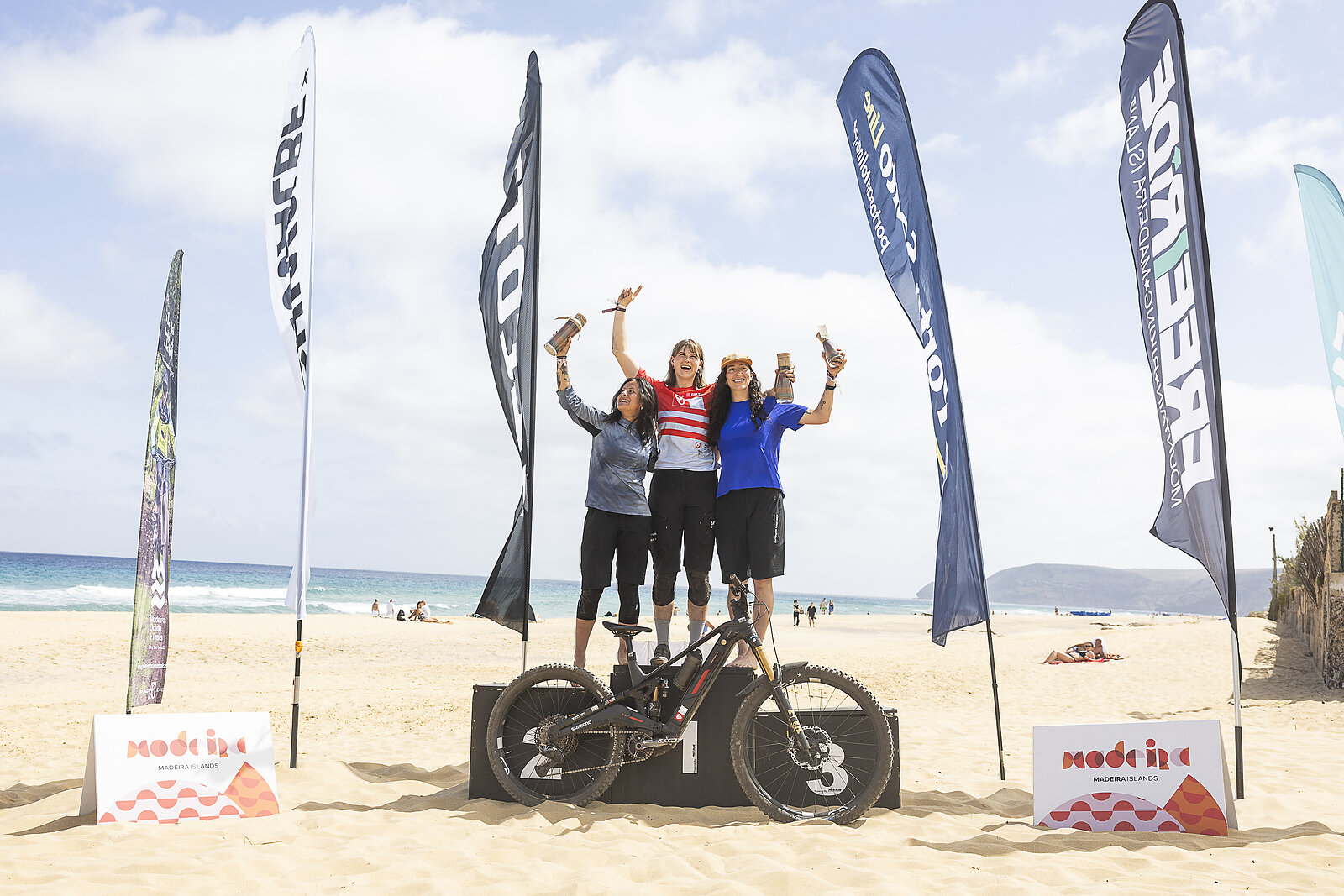
Trans Madeira sounds like an amazing experience and a more relaxed approach to enduro racing.
Georgia: Yeah, it felt like how EWS races were for me when I raced them like 10, 12 years ago. Back then, it was an adventure; you didn't really know where you were going, and because there was no shuttling and the stages were very adventure-based, it was kind of like blind racing. At the end of the stage, if someone had a flat, everyone would stop and help. It just had a different feeling. Racing Trans Madeira definitely brought me back to that feeling of just being on your bike and having a funny story to tell at the end of the race. Everyone has a funny story to tell at the end of the stage, and that part's really fun.
Are you planning to race Trans Madeira or a similar style race in the future?
Georgia: We're definitely scheming when in the calendar it works to do the next one.
Kirsten: Yeah, very keen. Whether it's Madeira or going to Mexico for the Trans Sierra Norte, that would be sick with our little crew. I chickened out, but everyone besides me all got tattoos. So, I think it would be fun to have a reunion at a different trans-style race and just explore a different part of the world. And yeah, maybe I'll get a tattoo this time.