Getting a Lift The Legacy of Gravity Logic
In hindsight it seems so obvious, like the love of your life who’s been hiding in plain sight for years. Attach your mountain bike to a chairlift, ride up the lift, unload your bike, then ride it down the hill. Repeat.
However, in the mid 1990s, lift-accessed mountain biking was a novel concept. Ski resort owners were scheming of ways to make better use of expensive lift and resort infrastructure that sat idle for half the year or more. A few American ski hills, like Mammoth in California and Killington in Vermont, had recently opened bike parks. Many other ski resorts were allowing bikes on lifts, but the trails were mostly technical, cross-country singletrack with—gasp—uphill sections.
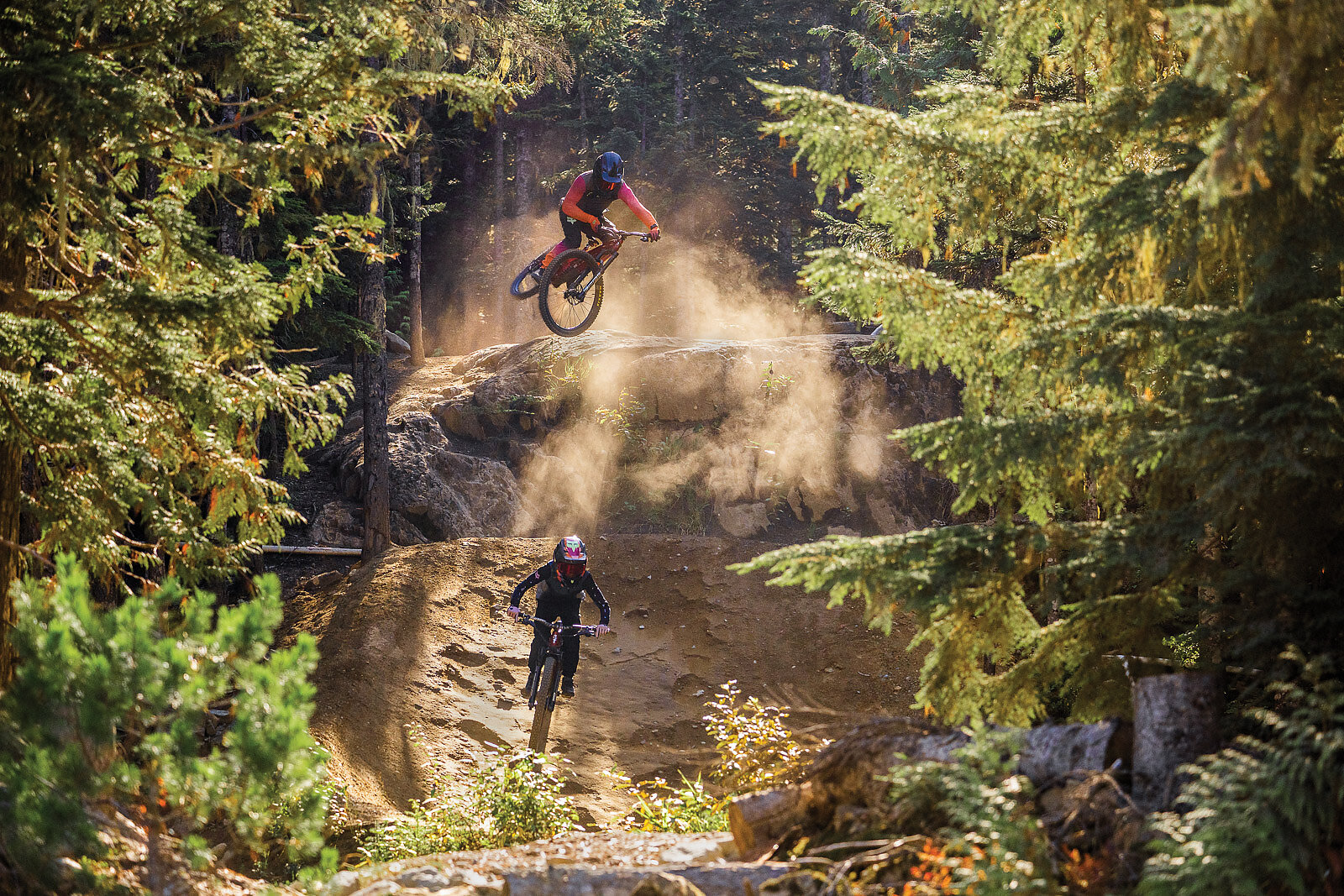
Whistler, though not the first out of the gate, is truly where the bike park concept was refined and perfected. Today if you mention A-Line to a group of mountain bikers, whether in Australia or Europe, they’ll know what you’re talking about. Coincidentally during this time of evolution and transition in the resort world, a trailbuilding company emerged called Gravity Logic. The company would grow and leave its mark on bike parks across the planet. It has been involved in the design and construction of more than 70 projects in 20 countries, on four continents, and counting. If there was dirt in Antarctica, Gravity Logic would have been there as well.
The company’s success is a tale of its three founders Tom “Pro” Prochazka, Dave Kelly, and Rob Cocquyt being in the right place at the right time, spotting an opportunity in the evolving zeitgeist of mountain biking, and taking a risk. Of course, a little good luck played a part too.
Before Gravity Logic was a twinkle in anyone’s eye, longtime Whistler local Eric Wright had the bright idea of starting the Whistler Mountain Bike Park in 1996, running it as a concession. Wright hired childhood friends Cocquyt and Kelly from Otterburn Park, on the south shore of Montreal, to build the first trails.
“Dave and I had known each other since kindergarten, and we spent much of our youth together exploring the rivers, creeks, and quarries and small mountains around our homes,” Cocquyt says, remembering how they’d push their beater bikes up a forested hill and ride down roads, game trails, and walking paths.
Eventually both moved west, Kelly to Squamish and Cocquyt to Banff. Rock climbing later drew Cocquyt further west for a taste of Squamish’s legendary granite. Mountain biking around this former lumberjack town at the head of Howe Sound was going off. After reconnecting with Kelly, he made a permanent move in 1995.
“Dave and I rode every trail we could find,” Cocquyt says. “We rode every logging road that seemed to lead to somewhere. Then we rode them all in the opposite direction.”
They started building trails, for free at first, the way most trail networks are born. The two transplanted Quebeckers, along with a revolving group of friends, scratched out evocatively named trails such as The 19th Hole, One Man’s Garbage, and Another Man’s Gold within the mossy Squamish rainforest. This led to a paid trailbuilding contract thanks to some provincial forest service funding that produced Squamish classics such as Upper, Middle, and Lower Power Smart and Pseudo Tsuga. When Wright called offering a temporary gig to build trail for the nascent Whistler Bike Park, they said sure—hard to turn down money for doing something you love to do.
Kelly and Cocquyt packed the tools, fired up the mini-excavator, and crafted the park’s first selection of trails, including Golden Triangle and Crack Addict, which the builders originally dubbed POLP Fiction.
“‘POLP’ stood for ‘People of Lesser Pride’ because Dave and I were unapologetic shuttle addicts in Squamish at a time when people made fun of our lazy ways,” Cocquyt says.
In 1999, Whistler Blackcomb, then owned by Intrawest, took over the bike park. Cocquyt had started a cabinet making company. To survive, he needed to make more money than itinerant trailbuilding could pull in.
Enter Prochazka, a ski racing coach, who Whistler Blackcomb hired as its bike park manager.
“I didn’t have any trailbuilding experience, but I had management experience from running the Dave Murray Ski Camps,” Prochazka says. “I kind of cruised into the bike park manager position.”
He grew up on Vancouver’s legendary North Shore, shredding techy classics like Seventh Secret, Krinkum Krankum, Stairs of Despair, and Lady’s First on his rigid Stumpjumper that he had saved up for and bought from Deep Cove Cycles. This was the dawn of a mountain biking era before the words “North Shore” became an adjective used around the world to describe a certain type of steep, rooty, and rocky trail punctuated by acrobatic skinnies and other features.
Prochazka brought Kelly on to manage trail development at the Whistler Bike Park. In turn, Kelly convinced Cocquyt to sell his cabinet making tools and join the team. In the early days of the bike park, where the lives of these three future business partners intersected, none of them dreamed that trails would become a lifelong career. Scuffing around in dirt and rock with mini excavators, rakes, and shovels still seemed like a bit of a lark—a youthful tangent that wouldn’t last.
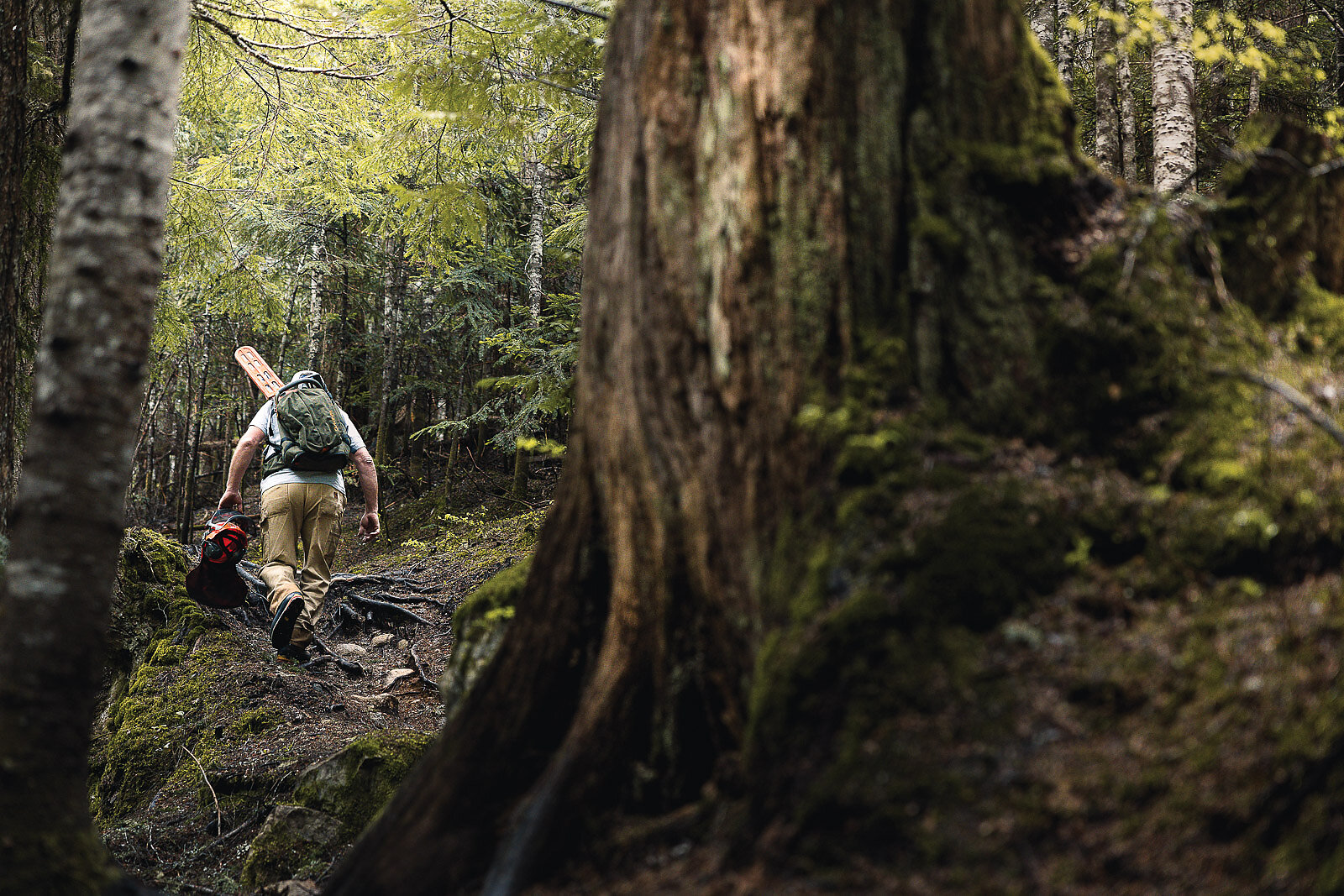
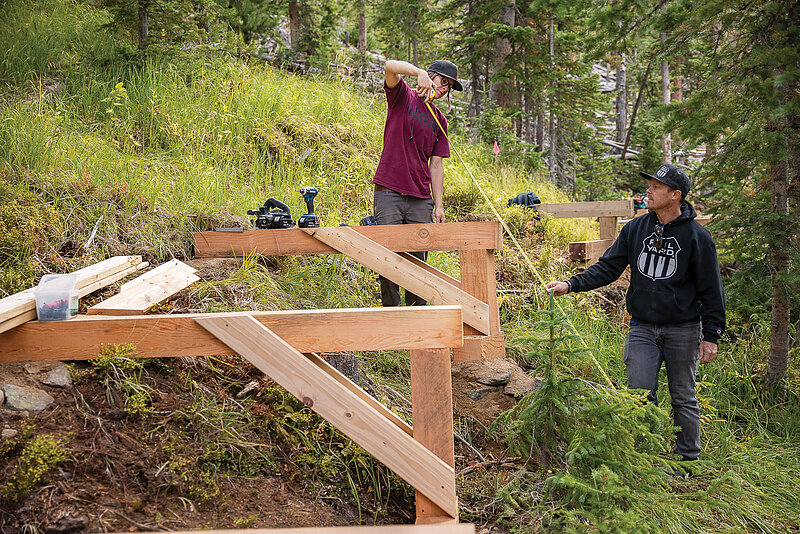
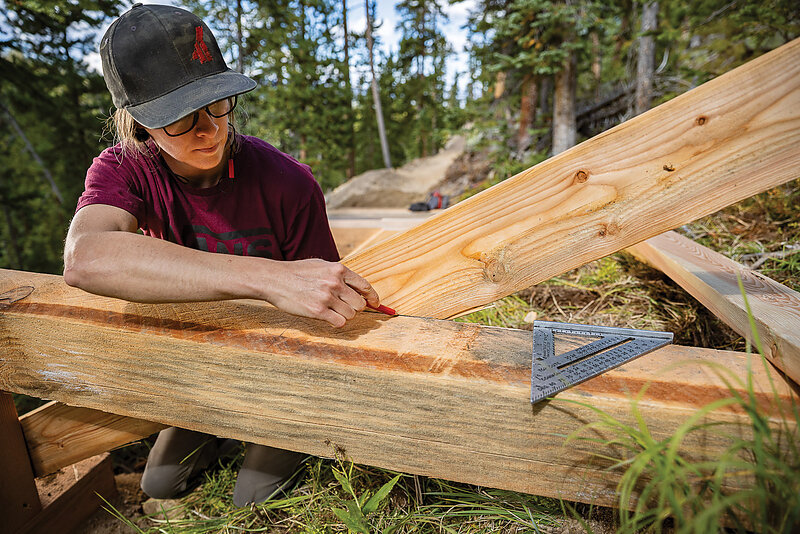
It was a steep learning curve for the trio as Whistler Blackcomb invested in trails. The small network grew quickly, with A-Line, Easy Does It, Dirt Merchant, Crank It Up and many others coming online. The bike park expanded to the Creekside and Garbanzo zones, well on the way to becoming the epic, 70-trail, lift-accessed network that it is today.
In 2001, annual biker visits were under 20,000. Over the next six years, they would top 100,000, Prochazka says.
“It was a big thing, people were coming,” he says. “We were answering the call and building more trails.”
Kelly, Prochazka, and Cocquyt would soon answer another call.
The Whistler Blackcomb buzz percolated through the resort universe and managers and entrepreneurs started showing up wanting to tap into the secret of bike park success. Prochazka was soon spending more time giving tours than managing the bike park. It wasn’t long before a lightbulb illuminated in the active brain of Rob McSkimming, who at the time was Vice President of Business Development for Whistler Blackcomb, the driving corporate force behind the bike park, and a co-founder of Crankworx. McSkimming wanted to start charging for bike park development consulting instead of giving it away for free. Gravity Logic was launched in 2005 as a distinct business unit owned by Intrawest. These were fun times, remembers Kelly. They were traveling around the U.S. and Europe like rockstars, often given the royal treatment by resorts anxious to get into the bike park biz. In 2006, Fortress Investment Group, an American private equity firm, bought Intrawest for $2.8 billion. The Fortress bean counters immediately audited the books and spotted a little item called Gravity Logic that wasn’t making much money. They told to McSkimming to get rid of it.
He offered it to Kelly, Prochazka, and Cocquyt, who between them barely had three dimes to rub together. But the terms were tasty. The price was $30,000 Canadian dollars, half of which would be paid in contracting services for the Whistler Bike Park. Kelly was nervous. He and his wife had a three-month-old daughter in tow and a steady paycheck was simple, reliable, and easy.
“Pro convinced me,” Kelly says. “He’s like, ‘Dude, you’re not going to get anywhere working for this company. [If] you want freedom then you have to take the risk. This is going to work. You won’t regret it. It’s the right decision.’”
The three partners took the proverbial leap of faith in 2007 and signed on the line. In retrospect, it was the deal of a lifetime. Their debt to Fortress would be paid off in two years.
The initial years of running Gravity Logic as a Whistler Blackcomb side business made for a perfect launch. In their first summer as business owners, the trio had a full slate of work.
While Whistler Bike Park was undeniably important for Gravity Logic, both Kelly and Prochazka consider Trestle Bike Park in Winter Park, Colorado, to be its breakthrough project. The resort already had an approved bike park master plan, however, when the Gravity Logic boys hit dirt there, they quickly agreed that it missed the mark. The plan put trails in the wrong place. The terrain was too steep and rocky. They felt that it was doomed to fail. Telling their first big client to pump the brake levers, scrap an expensive master plan, and start from scratch took guts.
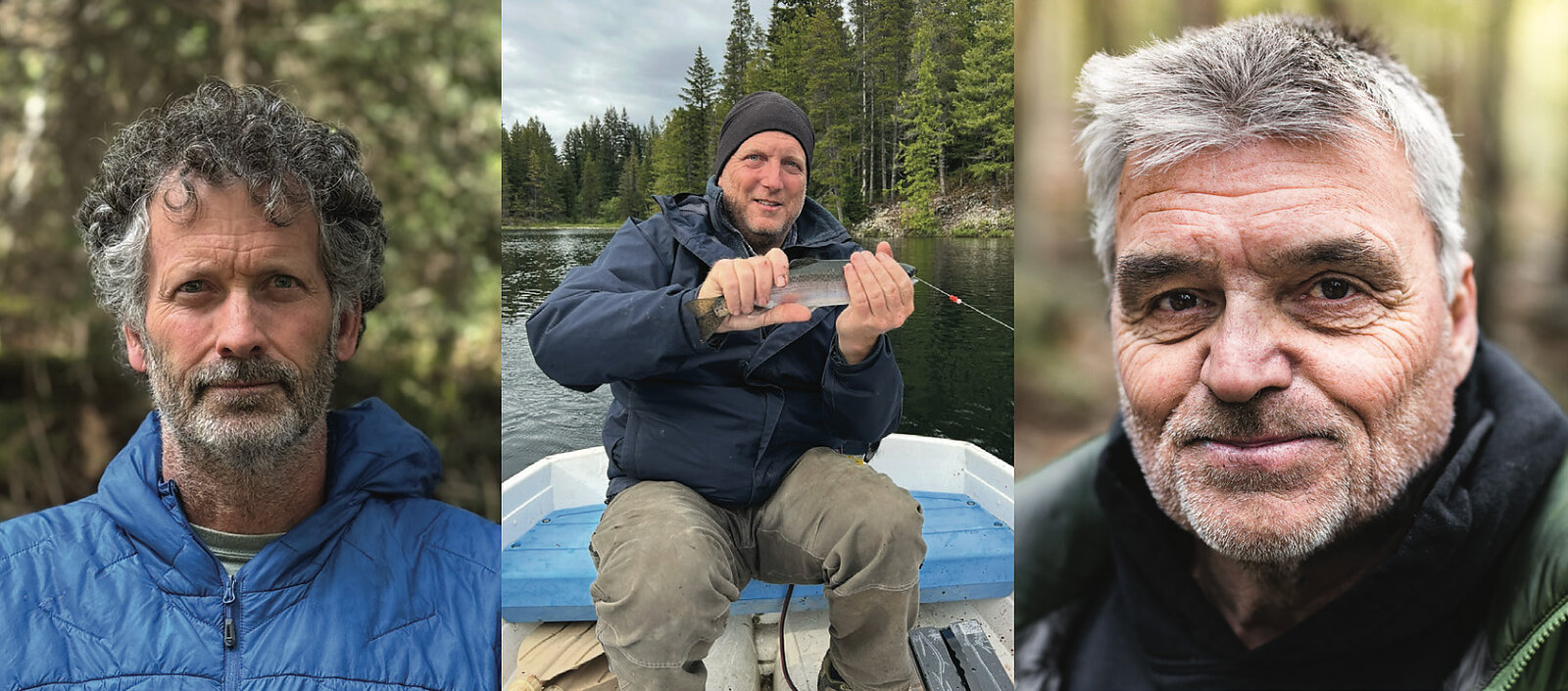
“It was a big gamble for them to put their faith and trust in us. They gave us the keys to the castle,” Kelly says. “It was sort of the first job where we could say, ‘Hey, Whistler wasn’t an accident and the three of us, the owners of Gravity Logic, had a huge part in making it what it is.’ Of course, there are lots of other people in a massive organization that were part of that success, but the point is Whistler wasn’t a fluke.”
To say that Gravity Logic went on to conquer the world wouldn’t be a stretch. Airport lounges became a second home for the founders and a small team of trail artists and consultants. Their travels took them to well-known resorts and obscure mountain towns, like Järvsö. This small Swedish tourist destination north of Stockholm was for years known for its family-friendly ski hill. Besides a zoo with wolverines and other endemic Nordic species, Järvsö didn’t have much going on during summer months. If there were tumbleweeds in Sweden, they would have been blown down main street here.
In 2007, Lars Ek Lööv, a freelance photographer living near Järvsö at the time, took his two young kids on a trip to visit a Swedish friend in Whistler. His friend rented two downhill bikes and told Ek Lööv that they were going to hit the bike park.
Ek Lööv wasn’t a mountain biker. He says he was more worried about leaving his kids fatherless than he was excited about getting his kicks on a bike. But after a day lapping the park and watching eager crowds lining up for the Fitzsimmons chair, something clicked.
“It was one of those things in life when I asked myself, ‘Why haven’t I done this before?’” Ek Lööv says.
After turning some knobby tires on Whistler dirt, the wheels started turning in his head when he returned home and looked at the summertime sleepy slopes and idle chairlifts of Järvsöbacken, his local ski hill. He imagined replicating on a smaller scale what he had experienced in Whistler, but he wasn’t exactly sitting on a mountain of Swedish Krona. The owners of Järvsöbacken laughed in his face when he talked about the idea. Bikes on lifts as a summertime operation? No way. Ek Lööv wasn’t deterred and shared the back-of-the-napkin business idea with his buddy in Whistler.
“He said, ‘Call Gravity Logic. They’re the best,’” Ek Lööv says.
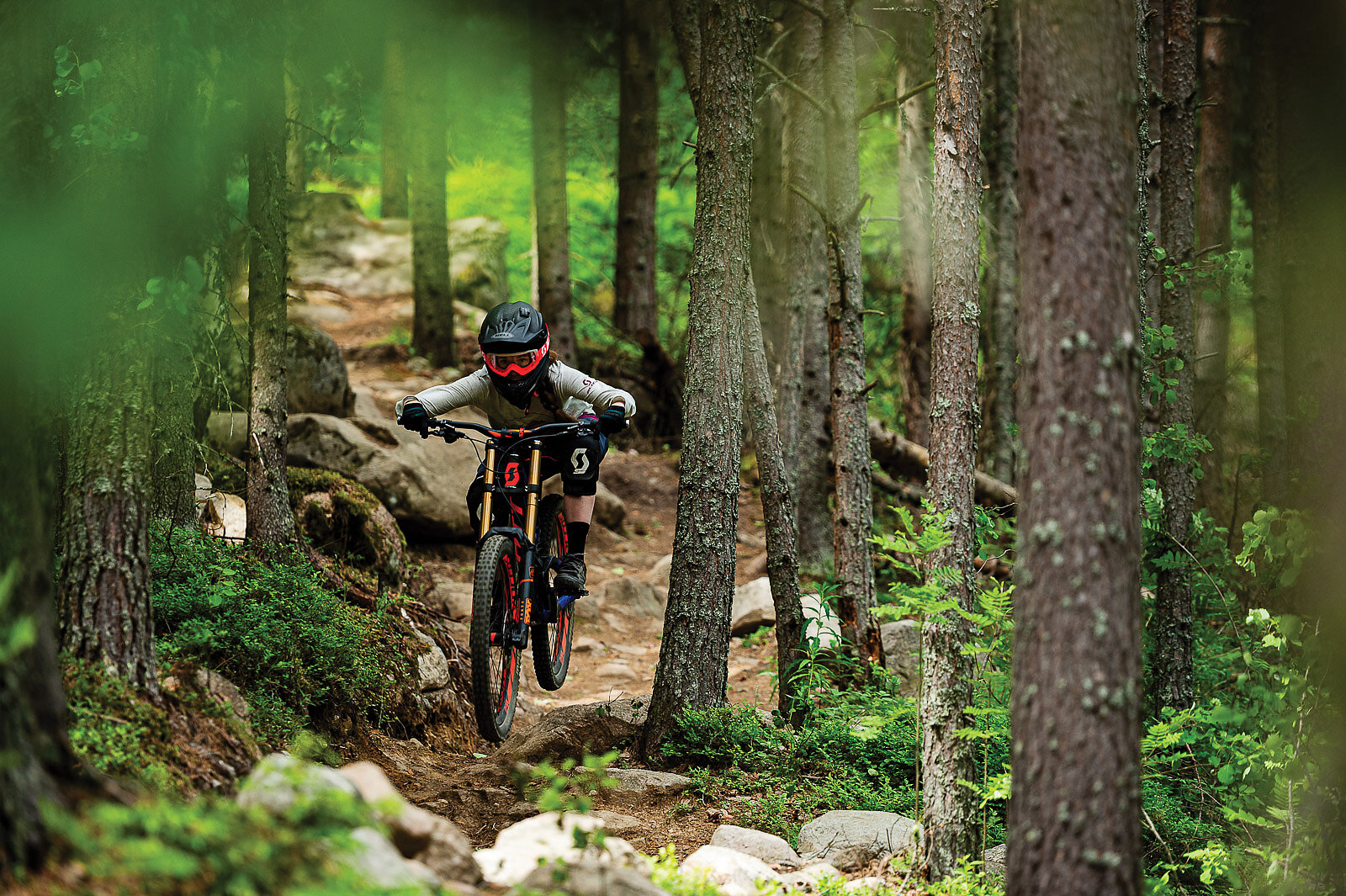
Ek Lööv dialed up Prochazka who was already in Europe working on another bike park project. He agreed to fly to Sweden for a two-day site visit. Ek Lööv remembers him being enthusiastic about the potential of the almost 700 vertical-feet of terrain and that he thought it would be perfect for a small bike park. A week later Prochazka sent a trail development plan that he thought would be reasonable to open with. The price tag seemed like a bargain to Ek Lööv.
“I think it was like around $30,000 USD,” says Ek Lööv, adding that the price didn’t include employees, excavators, and other costs. “But to me it seemed kind of cheap.”
He got some partners together and convinced the skeptical ski hill owner to give them a summertime lease. Gravity Logic got to work in 2009 and Järvsö Bergscykel Park opened the following summer with four lift-accessed trails. It was a nail-biter. Would anyone come from Stockholm to ride their bike in Järvsö?
Come they did. In the second year of operation, they hit 5,000 riders. Ek Lööv remembers in the spring of 2012 sitting at the top of the chairlift with Prochazka and asking him if he thought the bike park could hit 10,000.
“He said in three to four years we’re going to have 20,000. And I said, ‘No, that’s not possible,’” Ek Lööv says. “Now we have 30,000 visitors annually.”
Järvsö was further proof of the mountain bike tourism concept fueling Gravity Logic’s success. As summer in Järvsö boomed, Ek Lööv and his partners built a hotel at the base area near a bike rental shop and café. The town also flourished. New restaurants opened and ski cabins that once sat shuttered are booked in summer.
The Järvsö Bergscykel Park is yet another Gravity Logic success story. In nearly 20 years of operation, Prochazka can only think of one project he regrets getting involved with. It was a plan hatched by non-mountain biking and baseball loving businessmen in Wisconsin who wanted to create a bike park on a former garbage dump site. It failed.
Otherwise, the boys at Gravity Logic have maintained a near-perfect track record when it comes to seeing bike park potential even when topography—or a distinct lack of it—might suggest otherwise.
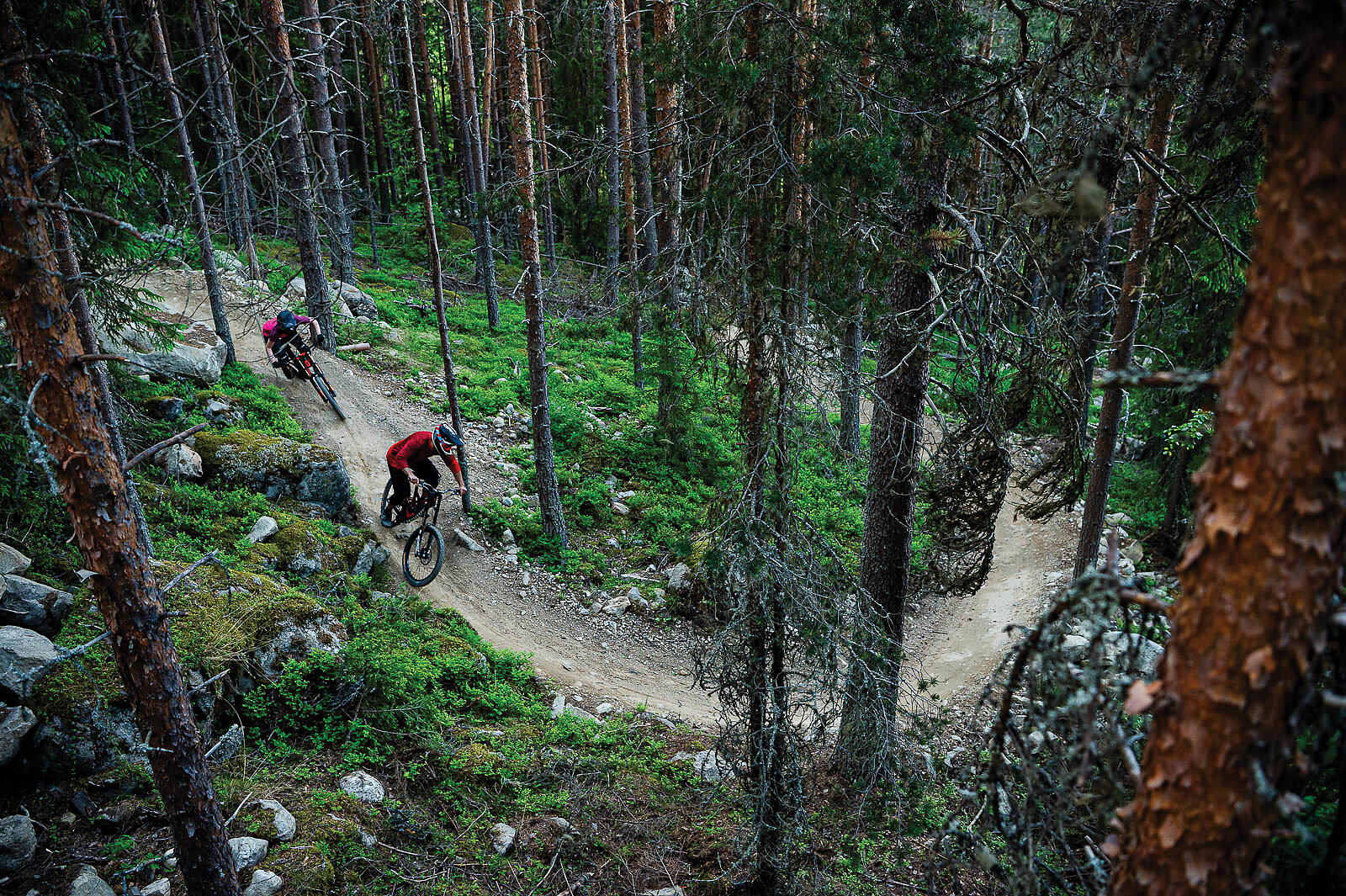
That’s how the company ended up in Bentonville, Arkansas, where Steuart and Tom Walton of Walmart Inc. have poured millions of dollars into mountain bike trail networks spanning hundreds of miles. What started with a passion for mountain biking has evolved into a recruitment strategy for Walmart’s corporate staff. In a surprisingly short amount of time, Bentonville has transformed from a nowheres’ville in most riders’ eyes, to a place rich with recreation opportunities where talent wants to put down roots. And the Walton brothers aren’t finished. The next phase of Arkansas mountain bike development calls for a lift-served bike park between the towns of Bella Vista and Bentonville. The proposal ticked a lot of the boxes—a chairlift, a bike park with trails funneling to a hub at the base with a bike and rental shop, a pumptrack, and burgers, fries, and beer. One box that it did not tick was available vertical.
“It was a bit of a gamble to build a lift on a hill that’s 290 feet tall,” said Gary Vernon, Director of Trail Development for the Runway Group, the Waltons boys’ investment company focused on funneling dollars toward recreational trail projects in northwestern Arkansas. “But it’s got great topography, with bluffs and waterfalls and no ski runs to deal with. Trails could be feature-rich from top to bottom.”
At least, that was his elevator pitch to Gravity Logic. Dave Kelly admits that on paper it was laughable.
“We said, ‘Look, anything under 300 vertical feet is just not worth it,’” Kelly said. “People aren’t going to wait in line for five minutes when they can pedal up in five minutes.”
But when he saw the site in person, he changed his mind. The proposed location lacked verticality but made up for it in two important ways: total area and the fact that trail design and construction wouldn’t be hampered by any existing ski resort infrastructure. It was a blank slate, and that was a novel opportunity for Gravity Logic.
“One of our biggest challenges is ski runs—snow making, lift lines, and all that stuff,” Kelly said. “We don’t have those challenges [in Arkansas]. So, although it’s only 280 vertical feet, 100 percent of that vertical is going to be well used.”
Tackling its first purpose-built, lift-accessed bike park is another feather in Gravity Logic’s bike helmet. The founders have a lot of dirt under their fingernails, maybe as much as a hundred years of collective trail design and building experience between them. And as climate change shrinks ski seasons around the world, there’s no shortage of mountain resorts that will be looking for another reason to exist. That’s why the stoke remains high and so does demand. Looking at a mountain side, envisioning the perfect line, and sculpting rock and dirt into something riders will remember never gets old, says Prochazka.
“Honestly it doesn’t feel like we’re going to work. I don’t even know how much money I make,” he says.
If you had asked Kelly and Cocquyt decades ago when they were skidding down deer trails in the leafy hardwood forests of Otterburn Park whether or not teenage adrenaline could one day fuel a career, they would have laughed. It’s a similar story for Prochazka, back when he was sending the Stairs of Despair on the white-knuckle North Shore. Life has a way of delivering unexpected turns, and when work doesn’t feel like work someone is doing something right. Call it simple logic.