Building Mattmo A Trail Tribute Opens in Nanaimo
A crowd of riders stands silent on Mount Benson in Nanaimo, British Columbia. Their attention is fixed on the couple standing slightly above them, tucked between the trees.
Wearing dark glasses, hands shaking, and speaking through tears, Chantel and Mike Jeromkin read from a creased sheet of paper. Below, a collective roar of support comes from the gathered group when they finish, and the first riders turn and drop into Mattmo.
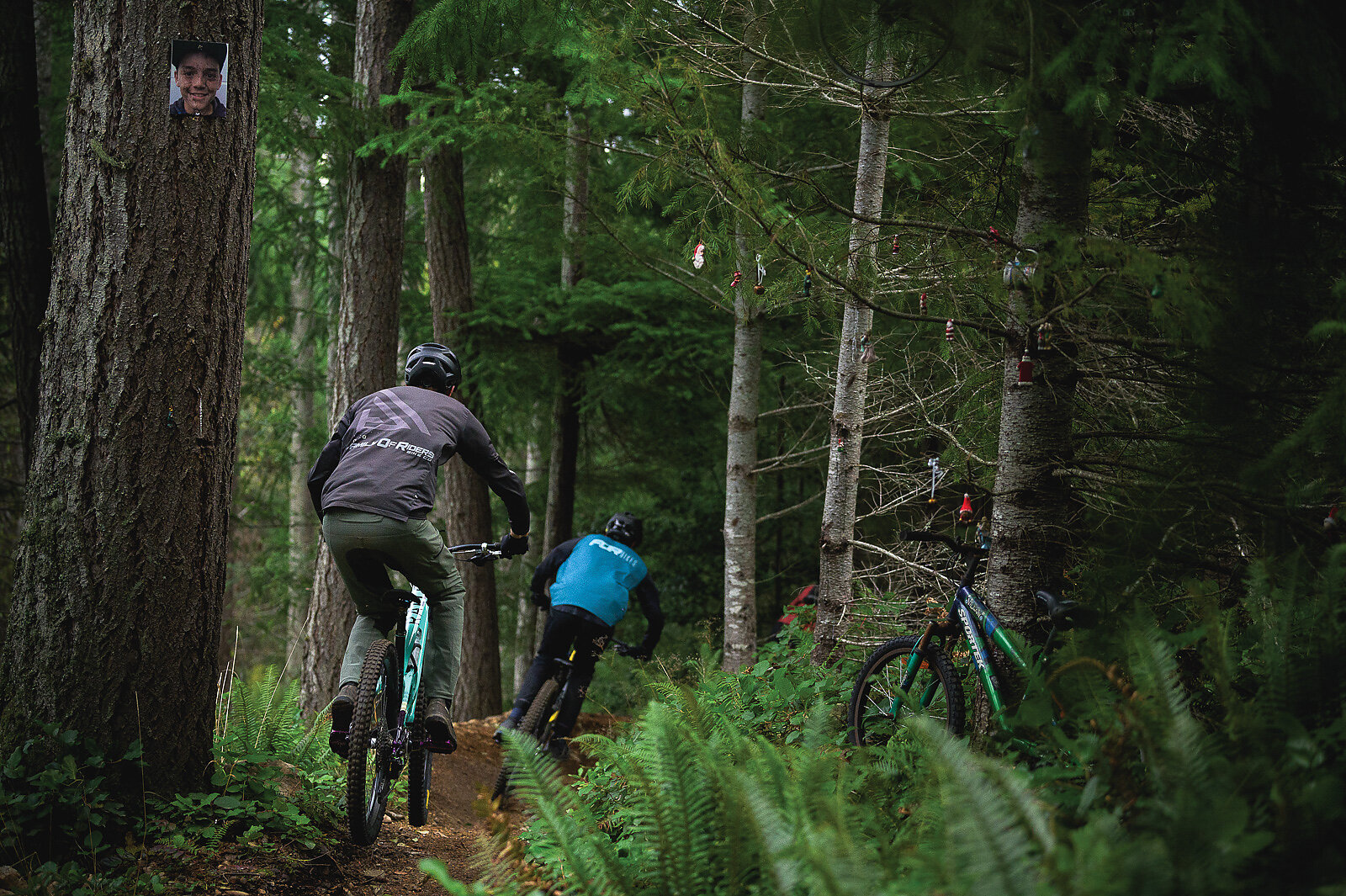
They rip past photos hung high in the trees, bike frames propped against trunks, and painted rocks lining the singletrack. The first hollers escape involuntarily, and then everyone is shouting—the sound echoing through the forest and vibrating around Chantel and Mike. Relief settles into their bodies. They built it right.
Mattmo is named after their son, Matthew Jeromkin. He was 13 when he died from an accidental overdose in February 2022.
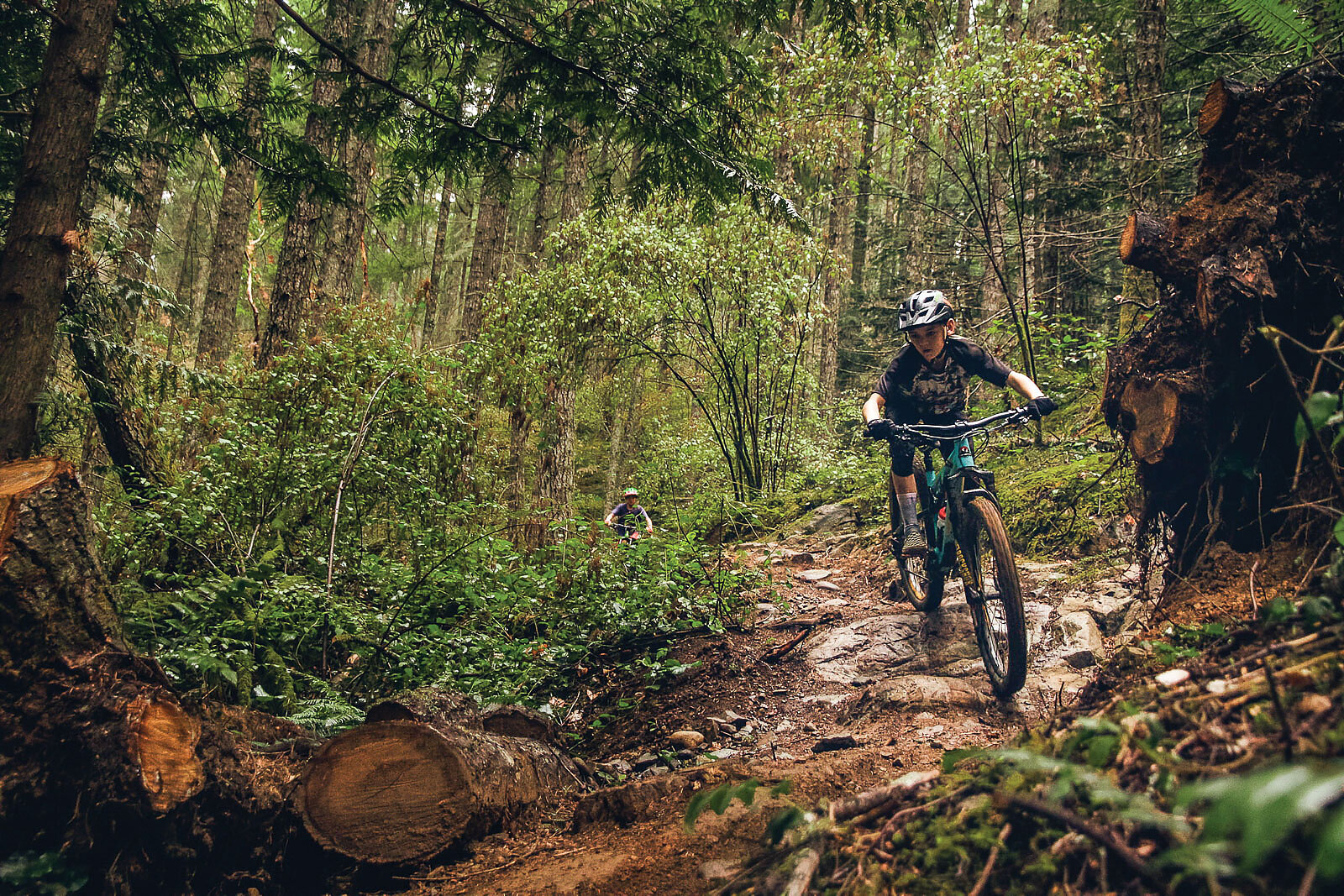
Matthew grew up chasing his older sibling Mira, lapping their kitchen on his run bike. By two and a half, he’d learned to pedal.
“As soon as it clicked, that kid was just on fire on a bike,” Chantel said.
Mike would take the kids out for long rides on his old hardtail. Mira eventually lost interest, but Matthew was hooked. He rode the way some kids run—like it was the most natural way to move through the world.
That instinct carried beyond bikes. Once, after being goaded by a kid who’d made an elite lacrosse team, Matthew taught himself the sport, made the team, and quit after the first practice. He wasn’t interested in playing. He just wanted to prove he could.
His determination was matched by a deep kindness. As young as seven, he would stop to talk with unhoused people, then ask his parents if they could buy them food or give them change from the car.
He struggled in school; his ADHD—diagnosed later—kept his nervous system in fight or flight. Constantly on the move, Matthew sometimes left the building altogether. With younger students, though, he was a popular big buddy. Working with them he slowed down, focused, and gave his full attention.
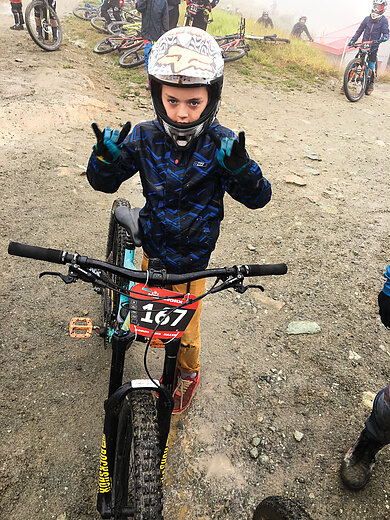
Brett Hancock, the principal of Learning Alternatives in Nanaimo, where Matthew attended after eventually leaving school, watched him carry the weight of his peers’ struggles and was struck by his insightfulness.
“They were kids who had a negative community presence, but Matthew knew their whole story, which often included significant trauma,” Brett said. “He understood their behavior and was pulled to care for them.”
Matthew and his dad became regulars on the local shop group rides. Full of talented mountain bikers, many of them recognized Matthew’s drive and ability at only nine years old. Nik Kay was one of them.
“He wanted to surround himself with powerful people so that he could progress,” Nik said. “That was a huge part of how he learned.”
Grant Laird, a close family friend and frequent riding partner, remembers Matthew eyeing up the optional triple on Max Power—his favorite trail. He barely weighed 60 pounds and struggled to carry enough speed, but he dropped in anyway. He came up short, went over the bars, and walked it off while breathing hard through his nose. Already, he was determined to come back for it.
A couple of months after Matthew passed, Chantel and Mike sat in their living room with Grant and their friend Sharon Little. The lights were low. Conversation was sparse.
“We didn’t know how to cope with the loss,” Grant said. “So, I said, ‘Let’s build a trail.’”
A week later, they were walking through the woods on South Benson—the place Matthew would head for when he cut school—searching for a line.
“Once we walked in there, we knew it had to be beside Max Power,” Mike said. “Standing there and hearing kids ripping down that trail, hooting and hollering—it reminded me of Matthew.”
The prospect of hand-building a trail was overwhelming, but the work got easier and more intuitive as they progressed. Building became therapy—physical work taken to the point of exhaustion.
Chantel and Mike had tried everything to help Matthew. When the COVID-19 pandemic hit, group rides stopped, and everyone was pulled inward and apart in isolation. Bike shops were suddenly slammed with work, and many of the people Matthew looked up to—the riders and mentors he spent time with—were stretched thin and unavailable. Without those routines and points of connection, Matthew searched for other ways to soothe his busy brain. He was frequently gone from home for days at a time and used drugs to self-medicate.
The pandemic had shut down community supports; there were no counselors, and every attempt to find help led to another dead end.
At one point, Chantel drove him across Canada, hoping that getting him out of Nanaimo would help. But it was on that trip—staying with family in Ontario and surrounded by love and support—that it became clear the struggle wasn’t environmental. It was internal.
A scan showed his brain nearly completely lit up in red.
“Basically, his brain was on fire and going a million miles at once,” Chantel said. “He told me, ‘Mama, my brain tells me to run, but my heart tells me to stay. I just can’t get them to say the same thing.’”
The day Matthew overdosed is etched into Chantel’s memory. He was home. He was sober. They had been joking around. As she reached for the doorknob to go for a short ride with Mike, she heard Matthew laughing upstairs with a friend.
“I wanted to go give him a hug and tell him I loved him, but I didn’t want to embarrass him,” she said.
Mid-ride, Chantel got a call. A cop, through tears, told her they needed to get home. As they rushed to the house, Chantel paused, put her hands on her knees, and took a deep breath. She knew their lives would never be the same.
Matthew didn’t die from taking too many drugs. He died because the drugs were tainted.
“Our house is so quiet now, I miss the chaos and loudness of Matthew,” she said.
As word spread about Matthew, the community wanted to help. Sharon started a GoFundMe that has funded a bike program for the kids at Learning Alternatives, sponsored prize money for kids at local races, and provided trailbuilding tools.
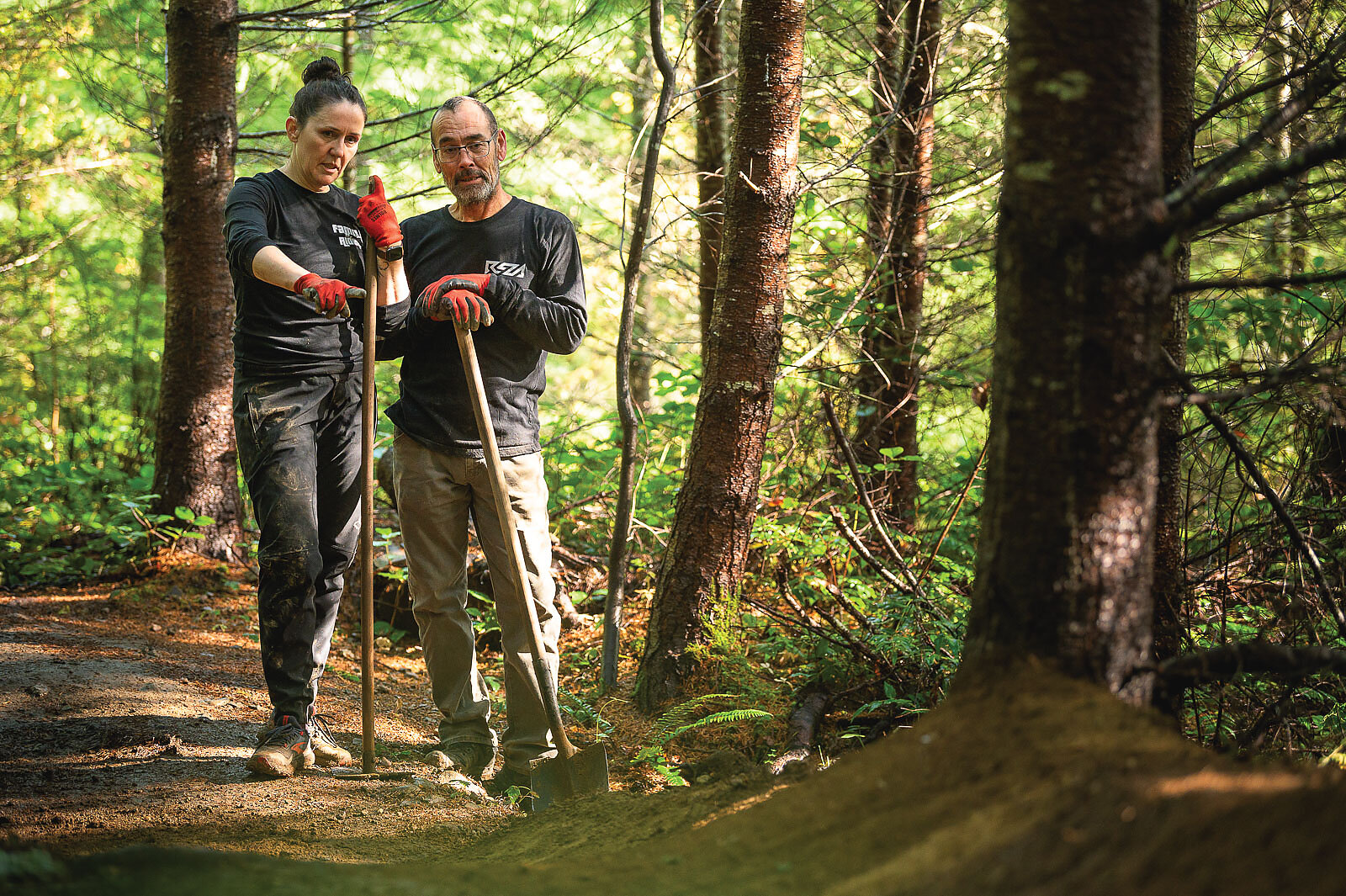
The longevity of both the trail and the memorial became the priority. Instead of just skidding the moss aside, Mike and Chantel, with a handful of friends, removed black organic material, laid down rocks, and packed gold on top. Days of labor turned into years, and they decided to use some of the donations to hire Dillon Butcher and Cole Nichol of Reza Trails to complete the upper section.
"Neither Mike nor Chantel had built any trails, but their passion and drive are really reflected in Mattmo,” Dillon said. “They spent so many hours building and perfecting—they redo things until it is absolutely perfect.
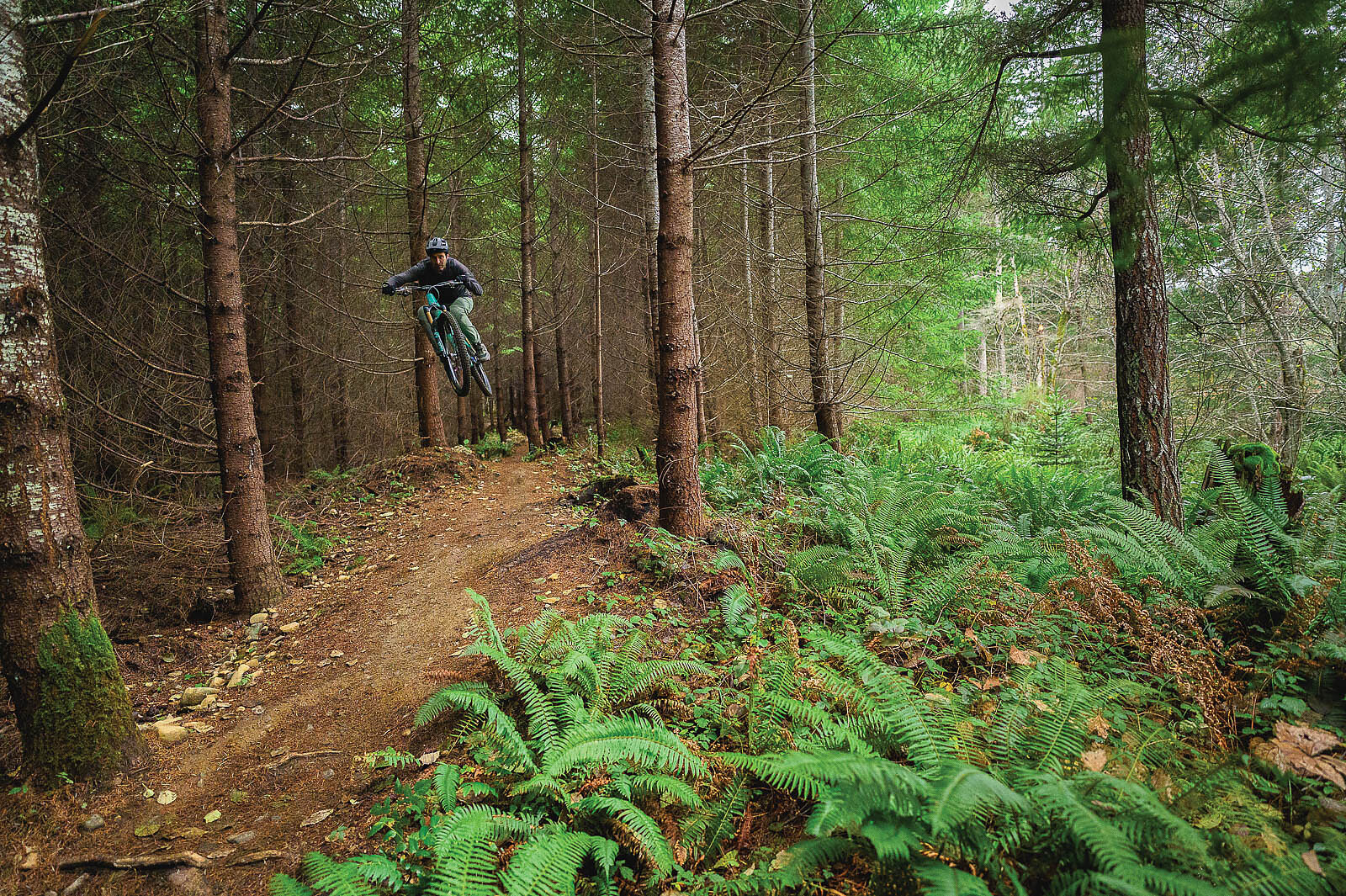
Mattmo—Matthew’s childhood nickname—is fast and playful, built to reward trust. The gradient builds speed without ever feeling out of control, with deep, supportive berms and predictable, smooth jumps. It flows through the forest before opening into longer, smoother, undulating sections. The line stays inviting rather than technical, balancing sharp corners and rolling features with rhythm and consistency. Lower down, the forest closes in and the trail darkens, narrowing focus at high speed, before easing out into a mellow finish near a creek. From start to finish, Mattmo feels intentional—confident without being aggressive, accessible without being diluted—a trail designed for progression, flow, and joy.
Friends have called it a love letter to Matthew.
South Benson has traditionally been dominated by steeper, faster, gnarlier black and double-black trails. Mattmo meets riders where they are. Taken at a slower pace, it feels smooth and easy to trust. For advanced riders, the same line becomes something else entirely: fast and purely fun. In an enduro-style network, adding something more accessible changes who the place is for. It opens the mountain to riders who want to progress.
Christine Lynch saw that play out when she designed the Murderhorn Maiden women’s enduro race. Last year, racers rode Mattmo as part of the course.
“I had my beginner ladies and young kids drop in lower down, and then all the expert and advanced ladies coming in from the top,” Christine said. “After the race, I saw more ladies riding Benson.”
It’s a trail that Matthew would have loved. It would have pushed him.
Mike and Chantel have poured years into this hand-built trail on unsanctioned land, under constant threat of logging or losing access. But impermanence is familiar territory. They know what it means to create with no control over what comes next.
On the night in their living room when they first discussed a trail, they had weighed the option of building a sanctioned, protected trail. But they wanted it to reflect who Matthew truly was— “a mischievous little ball of fire who didn’t do anything by the books.”
Matthew once told his mom that no matter how bad things felt, when he was in the forest on South Benson, it was his happy place.
“He wouldn’t have asked to build a trail, the same way he didn’t ask to go ride his bike in the middle of the school day,” Christine said. “He would’ve just done it.”
So, they just did it.
The risk of loss isn’t abstract. Sections of the trail are currently closed due to logging. When operations are complete, it will take months of work to clear and rebuild. But the work was never going to be finished anyway.
“I feel like it’s never going to be done,” Chantel said. “I feel like we’ll be building that trail until we can no longer physically do it.”
At the trail opening, riders continued to drop in between the trees, threading the narrow ribbon of dirt as it disappeared into shadow. Laughter carried down the line and kept going all day. Riders on eMTBs lapped the trail again and again, with Chantel and Mike among them.
This is how the couple finds Matthew now—ripping down singletrack, mud splattered across his face, where he was happiest.